

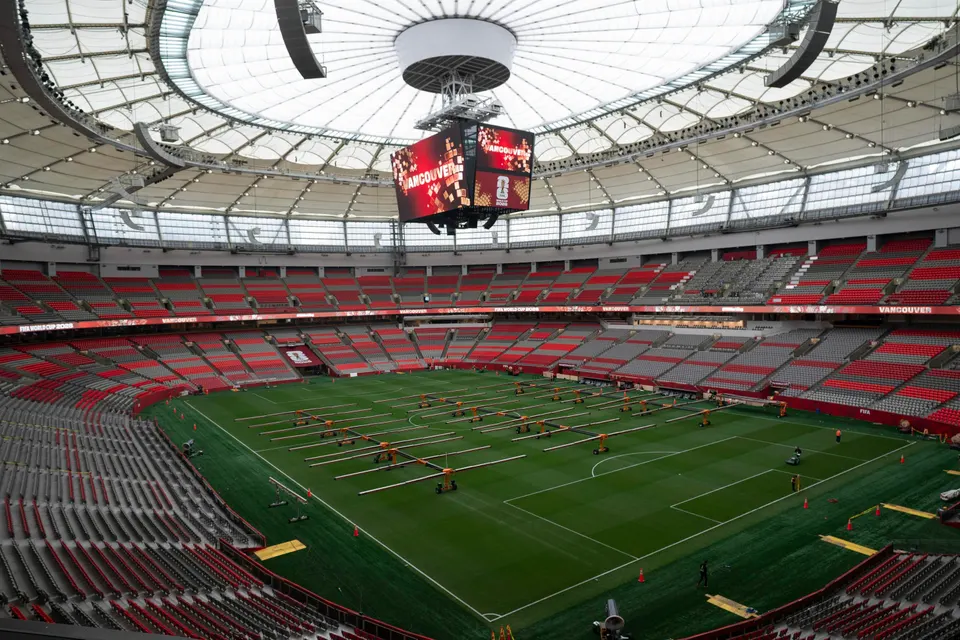
The turf destined for BC Place Stadium for the 2026 World Cup has been developing since the spring of 2025, with the intricate planning for its specialized sod system commencing back in 2022. This extensive preparation culminates with the opening matches, where Australia and Turkey will compete at one of the two Cascadia region venues on Saturday, shortly before Canada’s national team takes to the field for two consecutive games.
“We are meticulously preparing for the initial match, but our focus extends far beyond that, encompassing games two, three, four, five, six, and seven,” stated Dale Frith, FIFA’s Venue Pitch Manager for BC Place Vancouver, in a conversation. “There’s always a significant build-up leading to the first game, and post-match, our team will be dedicated to revitalizing the pitch, addressing any wear and tear, and ensuring it’s in optimal condition for subsequent fixtures.”
Addressing the Challenge of Pitch Consistency
Alan Ferguson, FIFA’s Head of Pitches, had previously identified the creation of a consistent playing surface across the 2026 World Cup venues as a paramount challenge. In response, FIFA’s Pitch Management Team initiated a comprehensive research project in June 2022. This initiative involved a partnership with the University of Tennessee and Michigan State University, aiming to develop a standardized pitch suitable for deployment across three distinct time zones, three nations, and three unique climatic regions.
A significant innovation arising from this project was FIFA’s development of shallow-stitching technology. This advancement allows for the installation of grass pitches irrespective of the underlying surface. At BC Place in Vancouver, this translated into the application of thin layers, totaling thousands of tons of specialized material, atop the stadium’s concrete floor and existing artificial turf. The process began with a membrane, followed by a drainage layer, an integrated ventilation and irrigation system, and finally, a root zone composed of a sand and soil mixture. This carefully constructed base was then rolled and compacted before the sod, or turf, was meticulously laid. All components were sourced domestically, with the grass cultivated at Bos Seed Farm in Abbotsford, located approximately 50 miles from the stadium.
A High-Tech Playing Surface
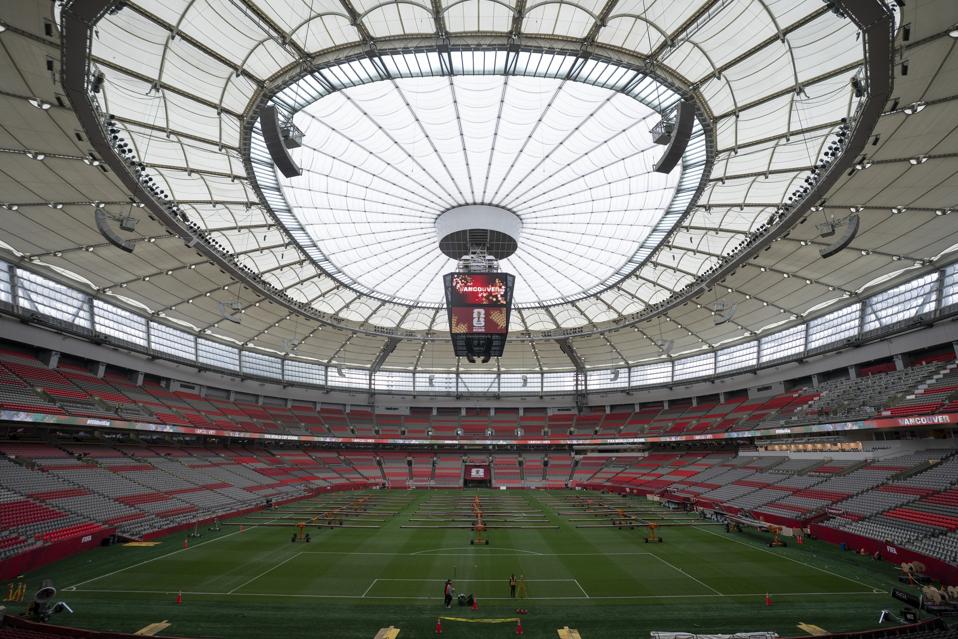
Chris May, General Manager of BC Place, elaborated on the field’s advanced nature, describing it as “a highly technical system incorporating automatic irrigation, layered drainage, integrated vacuum and ventilation, and grow lights.”
The installation process spanned approximately two weeks, necessitating meticulous coordination to transport the substantial volume of materials to the downtown stadium location.
The resulting playing surface is an engineered blend of Kentucky bluegrass and perennial ryegrass, specifically developed to thrive in Vancouver’s climate, with the integration of poly-based synthetic fibers. Frith noted that these hybrid fibers constitute approximately 5% of the pitch’s composition, ensuring that it remains “very much a grass pitch with a hybrid element.”
For Vancouver’s venue, ryegrass is prioritized due to its suitability for the local climate, whereas stadiums in more southern locations might opt for a greater proportion of Kentucky bluegrass. Frith indicated that ryegrass seed would be applied weekly to maintain turf resilience, with the synthetic material enhancing its durability.
Daily Pitch Maintenance and Care
The daily maintenance regimen for the pitch involves a combination of natural sunlight, when conditions permit, and advanced grow lighting systems. BC Place features a retractable roof, which allows natural sunlight to reach approximately 65% of the playing area. The southwest corner, being predominantly shaded, requires consistent coverage from grow lights. “Having the roof open makes a massive difference in here,” Frith remarked from the venue. “Today has a lot fresher feel with the roof being open.” The roof is closed during matches and is opened between events, contingent upon weather conditions.
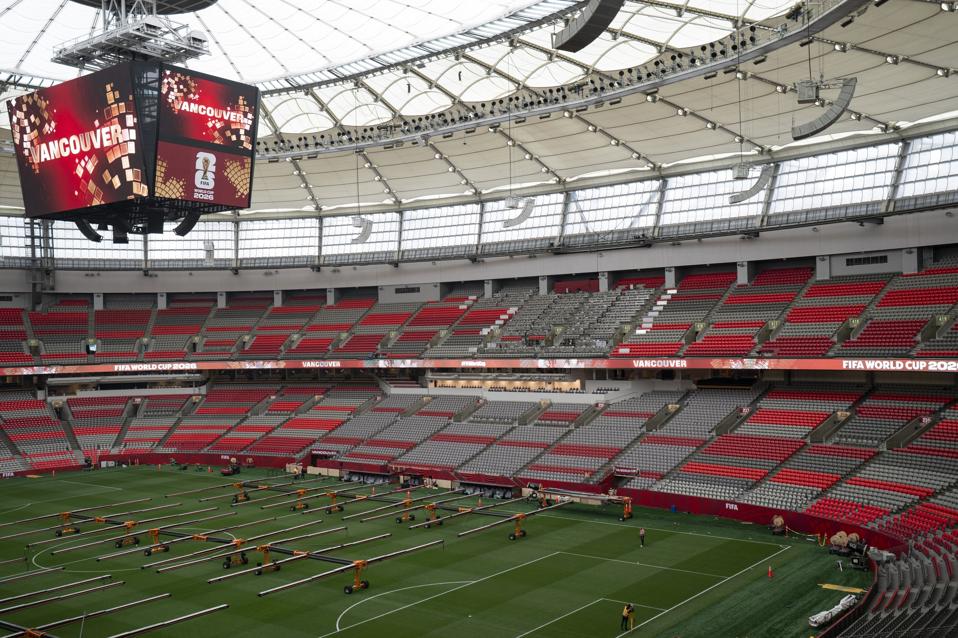
When the roof is closed, the grow lights continue to operate for 16 hours daily, simulating full daylight exposure to meet the grass’s natural requirements. “The batteries of the plant get charged up in those 16 hours,” Frith explained, referring to the plant’s photosynthetic processes.
The groundskeeping crew conducts daily tests to assess the pitch’s hardness, traction, and moisture levels. These readings inform the team’s decisions regarding the amount of water the turf receives via the integrated irrigation system. During the initial establishment phase, Frith mentioned that water levels were kept lower to promote robust grass and root development. As the tournament approached, moisture levels were gradually increased. Watering is administered immediately after the final mowing session the day prior to a match.
Crews have specific windows on match days for watering, including before kickoff, during hydration breaks, and at halftime. This ensures the grass remains adequately moist during play, a FIFA stipulation designed to guarantee smooth ball roll. The closed roof further assists in retaining this essential moisture.
The extensive focus on the pitch’s quality is the result of years of meticulous planning and cultivation, all aimed at ensuring a consistently optimal playing surface for the high-stakes 90-minute matches of the World Cup.
Business Style Takeaway: The FIFA World Cup 2026 underscores the critical role of advanced infrastructure and meticulous operational planning in high-stakes global events. Success hinges on innovative solutions, like engineered turf systems, and rigorous, data-driven maintenance protocols to ensure peak performance and consistency across diverse environments.
Details can be found on the website : www.forbes.com