

Neil Witte’s Ritual Pour initiative is dedicated to celebrating the nuanced art of beer, utilizing meticulously organized events to demonstrate how the pouring technique can significantly impact both flavor and aroma.
The Art of the Pour
Beer is often perceived as a simple beverage, poured with little consideration. However, the global landscape reveals a diverse array of pouring methods, from the traditional hand pumps found in British pubs to the signature wet foam characteristic of Czech cafes, all often presented in distinct glassware. This variety underscores that pouring is, in fact, a skill demanding considerable dedication and passion.
Master Cicerone Neil Witte seeks to illuminate these varied pouring styles through his events, primarily held in his home base of Kansas City, Missouri. The Ritual Pour series centers on exploring a single beer style, executed to perfection using multiple distinct pouring techniques.
Witte initiated the Ritual Pour concept three years ago, inspired by an encounter with JP Pfafflin, a brewer at Chicago’s renowned Dovetail Brewery. Pfafflin introduced Witte to Japanese beer pouring methodologies.
“I was already deeply immersed in Czech-style pouring, utilizing LUKR faucets known for their wet, creamy foam. Many Japanese pours incorporated exceptional foam in ways that were novel to me,” Witte explained. “At the time, few people were showcasing these techniques externally, so I envisioned a pop-up event as a unique platform for this.”
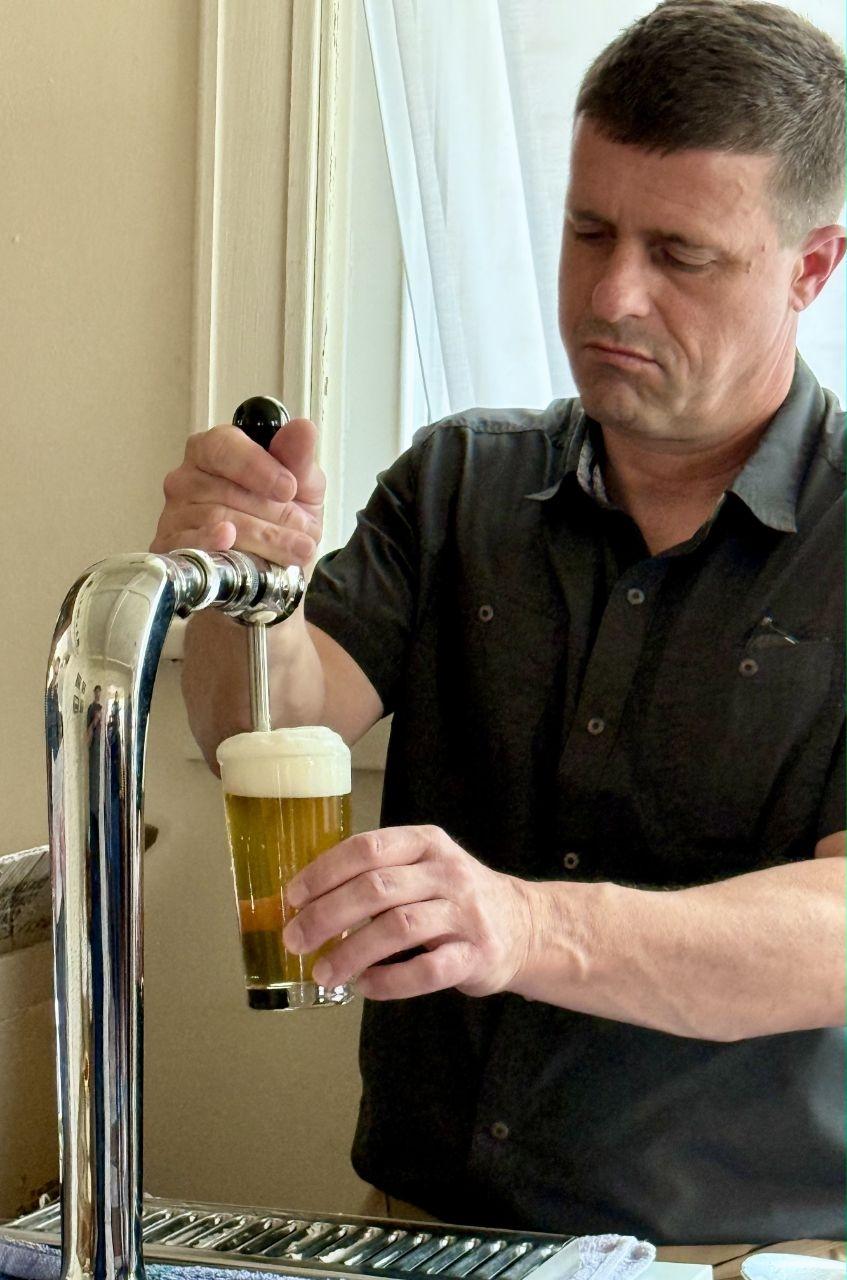
Witte, who possesses a specialization in draft management, undertook extensive research into various pouring techniques and acquired the necessary equipment to master these styles. He employs a roto-ball tap, identified as a Debitap, featuring a long, narrow spout and an integrated flow control valve for precise beer dispensing.
“I opt for this faucet because its ball valve mechanism, coupled with the elongated, narrow spout, grants me controlled foam dispensing, a distinct advantage over conventional rear-seated faucets,” Witte noted. “The flow control feature enables me to adjust the pour rate—either slowly to minimize gas breakout or more rapidly to enhance agitation and foam generation.”
His inaugural pouring demonstration took place at his residence in early 2025, after which he extended these experiences to a broader audience.
At a Ritual Pour event, Witte typically presents one beer style poured in seven different ways. His personal favorite, and arguably the most popular among attendees, is the “sharp pour.” This technique was inspired by Mr. Shigatomi of the Shigatomi Beer Stand in Hiroshima, whose methods Witte observed via YouTube.
“The process begins with filling the glass approximately two-thirds full, ideally closer to seven-tenths, with beer. Subsequently, foam is carefully layered on top, allowing the lighter foam to cascade over the rim of the glass,” Witte elaborated. “The result is a glass containing a layer of very wet, sweet, and creamy foam atop fully carbonated beer, preserving its inherent bitterness and effervescent mouthfeel. This creates a remarkable interplay of flavors and textures within a single serving.”
Beyond the sharp pour, the seven styles Witte demonstrates include: the single pour, the double pour, the triple pour (resembling a slow pour with stiff foam), the mild pour (designed to reduce carbonation for a smoother flavor profile), the all-foam pour (also known as the “Mliko” pour, originating from Czech tradition), and a no-foam pour. Witte acknowledges that many brewers express concern that omitting foam can negatively impact a beer’s flavor, emphasizing that beer foam is a concentrated source of flavor and aroma, integral to the overall sensory experience.
Witte generally selects a pale lager for his demonstrations, appreciating its “nice, snappy bitterness.” However, he has also successfully utilized American brown ales and German schwarzbiers, noting they yielded “great results.” He maintains that no specific beer style is unsuitable for these exploratory events.

To date, Witte has hosted approximately eight events at his Kansas City home and an additional eight at various local bars and breweries.
“I utilize 10-ounce glassware, which results in a serving size of about 7.5 to 8 ounces. Most venues price these around $6 per glass, though this can vary,” Witte stated. “Attendees receive a beer poured with deliberate care, offering the unique ability to select the flavor profile they prefer. The concept is to encourage sampling multiple variations, given the smaller serving sizes, allowing guests to discern the spectrum of flavors achievable from a single beer.”
Witte’s objective for attendees of a Ritual Pour event is clear.
“My aim is for people to recognize how intentional pouring can influence a beer’s flavor,” Witte remarked. “I also want to introduce them to a novel aspect of beer appreciation, something that is both innovative and emphasizes quality and the customer’s experience.”
Consequently, the next time you are at a brewery or bar, pay close attention to how your beer is prepared. The method of pouring can profoundly alter the drinking experience. Always remember to enjoy alcoholic beverages responsibly and in good company. Cheers!
The method by which beer is poured directly influences its resulting flavor and mouthfeel. This process dictates the level of carbonation within the glass and governs the quantity and quality of foam produced. Standard beer service at most establishments typically follows a consistent, albeit often basic, procedure. While this generally yields an acceptable beverage, deviations from optimal pouring techniques can significantly detract from the overall enjoyment of the beer.
Business Style Takeaway: This exploration into the art of beer pouring highlights how meticulous attention to operational detail can elevate a product’s perceived value and customer experience. Businesses across various sectors can draw parallels, recognizing that optimizing nuanced aspects of service delivery can create unique selling propositions and foster greater customer engagement.
Information compiled from materials : www.forbes.com