


Switzerland, a nation renowned for its economic dynamism and historically open stance towards international talent and capital, is poised to decide on a referendum that could fundamentally alter its demographic trajectory by capping its population. This proposed measure is intrinsically linked to a potential curtailment of immigration policies.
The referendum is scheduled against a backdrop of significant population expansion; the country’s populace grew by 10% in the decade leading up to 2025, reaching just over 9.1 million individuals. Concurrently, demographic shifts are becoming apparent, with the population aged over 65 now exceeding that of the under-20 cohort for the first time. Recent trends indicate a deceleration in both net migration and birth rates over the past year.
Switzerland’s attractive, relatively low taxation environment has fostered a concentration of global corporate powerhouses, including consumer goods giant Nestle, pharmaceutical leader Novartis, and a multitude of firms across the financial, luxury, and technology sectors. This economic ecosystem supports one of the world’s highest densities of billionaires and boasts a GDP per capita significantly exceeding that of many developed economies.
Official data from the end of 2024 reveals that 41% of the Swiss population possesses a “migration background,” a designation encompassing both immigrants and their Swiss-born descendants. First-generation immigrants constitute 32.5% of the country’s permanent residents. Furthermore, an estimated 1.4 million EU citizens reside in Switzerland, representing approximately 16% of the total population, with an additional 340,000 EU citizens commuting across the border daily for employment.
Recent polling suggests a divided electorate, with 52% of respondents indicating an intention to reject the population cap proposal, while 45% favor its implementation.
Mechanics of the Proposed Population Cap
Should the electorate endorse the population control initiative, the Federal Council and parliament will be mandated to enact measures aimed at constraining population growth through 2050. The proposed framework stipulates that immigration systems would be subject to increased stringency if the population surpasses 9.5 million at any point within the next quarter-century. Under such a scenario, asylum and family reunification programs would be the initial targets for potential reductions. Moreover, if the population were to exceed the 10 million threshold, Switzerland’s freedom of movement agreement with the European Union could face termination.
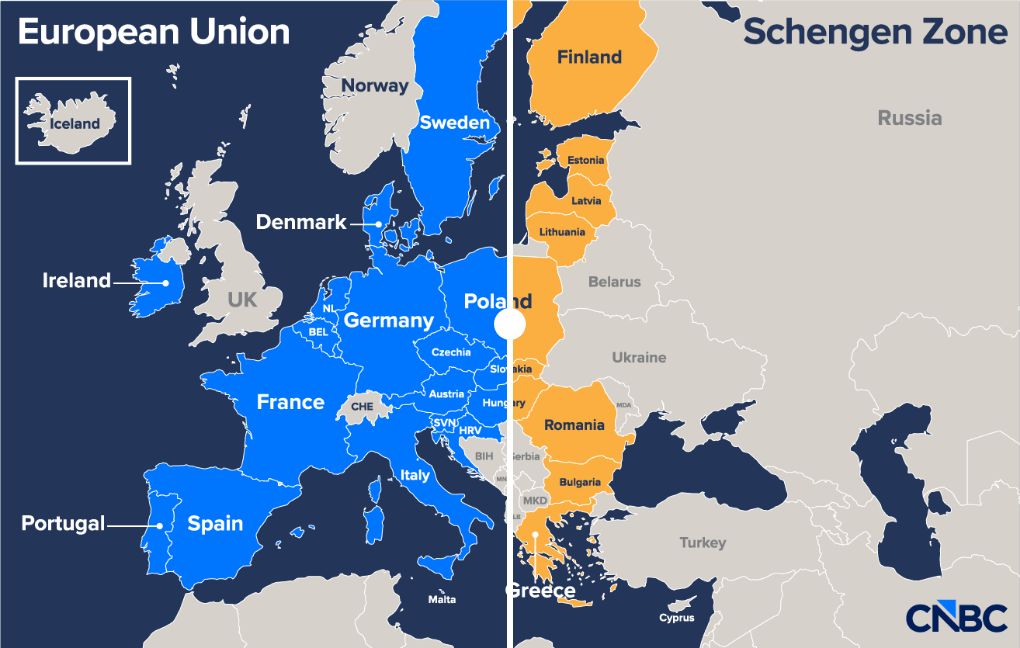
Switzerland’s participation in the Schengen Area facilitates border-free travel with numerous EU member states. This arrangement is complemented by a bilateral agreement ensuring the free movement of citizens between Switzerland and the EU, allowing individuals to reside and work in either territory, contingent upon securing employment or demonstrating sufficient financial resources.
The Swiss People’s Party (SVP), a prominent right-wing political force, is actively campaigning for a “yes” vote, urging policymakers to address what it characterizes as “overwhelming” population growth. The SVP asserts that even with a cap, the country could still accommodate an annual intake of 40,000 new residents. However, party representatives contend that unchecked population increases have strained public services, exerted downward pressure on wages, inflated housing costs, and impacted the educational and labor markets.
Conversely, major Swiss-based corporations have voiced significant concerns, arguing that stringent immigration caps would undermine the nation’s competitive advantage and exert a detrimental effect on its economy, which is already contending with subdued growth, a robust Swiss franc, disinflationary pressures, and the ramifications of international trade policies.
Economic Implications and Business Perspectives
Economiesuisse, a leading business federation representing approximately 100,000 member companies including global entities like Amazon Web Services, Roche, Google, and Johnson & Johnson, has formally opposed the population cap referendum. Its Chief Economist, Rudolf Minsch, emphasized that Switzerland’s prosperity is intrinsically linked to its “openness, innovation, and strong economic relations with Europe.”
Minsch acknowledged the validity of concerns regarding housing, infrastructure, and population growth, advocating for pragmatic policy solutions. However, he cautioned that “rigid immigration caps are not the right answer, particularly if they risk undermining the bilateral agreements with the European Union, which are of central importance to the Swiss economy.” He further highlighted Switzerland’s dependence on highly skilled foreign professionals, particularly in critical sectors such as pharmaceuticals, technology, and healthcare, asserting that significant immigration restrictions would inevitably “weaken innovation, growth, and competitiveness, while making it harder for companies to attract international talent.”
Philipp Navratil, CEO of Nestle, speaking at the Swiss Economic Forum, underscored the country’s appeal to international investors, stating, “It is important that these conditions in Switzerland are maintained.” He stressed that these favorable conditions were achieved through diligent effort and a commitment to reform. Navratil pointed to Nestle’s substantial operational footprint in Switzerland, including nine factories and three research centers, with a significant portion of its research and development activities remaining based there for over 160 years. He attributed this enduring presence to Switzerland’s reputation for “reliability, quality, talent, and established framework conditions that are simply attractive for a global company.”
Similarly, Sergio Ermotti, CEO of UBS, expressed apprehension regarding “extreme initiatives,” noting that while Switzerland’s substantial foreign-born population (around 30%, comparable to Australia and double that of Germany) may contribute to societal frustrations, restrictive measures are not the solution. UBS, a major employer in Switzerland, has approximately 33,500 employees within the country.
Joao B. Duarte, a professor of economics at Nova School of Business and Economics in Portugal, articulated concerns about the potential damage to Switzerland’s international credibility. He posited that apprehension among businesses regarding future access to European labor could preemptively influence investment decisions. Duarte drew a parallel to the United Kingdom’s post-Brexit experience, warning that the termination of free movement did not foster domestic labor self-sufficiency but rather led to labor shortages, recruitment difficulties, and increased costs in sectors reliant on flexible EU workers. He concluded that given the EU’s status as Switzerland’s primary trading partner, severing the free movement agreement, which is embedded within a broader bilateral framework granting Swiss firms preferential market access, could trigger significant repercussions extending beyond migration policy to the entirety of the Swiss-EU economic relationship.
Business Style Takeaway: The upcoming Swiss referendum on population caps presents a critical juncture for the nation’s economic model, pitting concerns over domestic infrastructure and services against the foundational pillars of its global competitiveness: openness, talent acquisition, and integration with the European economy. A “yes” vote carries substantial risks of disrupting established bilateral agreements, potentially impacting foreign investment, labor mobility, and the nation’s appeal as a hub for multinational corporations, thereby signaling a shift away from its long-standing pro-business and pro-immigration stance.
Details can be found on the website : www.cnbc.com