

 Max McClure/SS Great Britain Trust
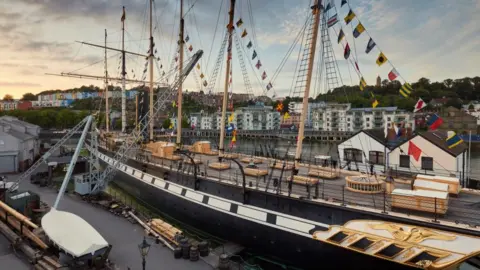
The historic site of the SS Great Britain in Bristol is undergoing a significant transformation, marked by a rebranding that shifts its narrative focus. Formerly known as Brunel’s SS Great Britain, the landmark will now be called Bristol Dockyards, signalling a deliberate move away from solely celebrating engineer Isambard Kingdom Brunel towards highlighting the experiences of the ordinary individuals connected to the vessel.
A New Chapter of Untold Stories
Launching on July 18th, Bristol Dockyards will unveil an immersive exhibition dedicated to bringing to light the previously unheard narratives of those who sailed and worked aboard the iconic steamship between 1845 and 1886. This era marked the SS Great Britain’s zenith as the world’s largest and swiftest passenger liner, connecting people from 51 different nationalities.
Connecting with Industrial and Colonial Legacies
The museum aims to illuminate Bristol’s intricate industrial past and its role in colonial history, with the new exhibition drawing on five years of dedicated research by local community groups. A newly expanded exhibition space of 2,000 sq ft will delve into the working life of the steamship, featuring the stories of the labourers who constructed the vessel, many of whom have remained anonymous until now.
Diverse Narratives Take Centre Stage
The exhibition will prominently feature the histories of individuals of colour, including George Moses, a ship’s cook originally from Jamaica, and James W Jones, a Barbadian musician and poet who journeyed from Melbourne to Liverpool. An Australian segment will explore the ship’s crucial role in transporting 15,885 emigrants from the United Kingdom, as well as its connection to the first First Nations cricket team.
Reflecting on Global Conflicts
Furthermore, the museum will address the ship’s use in significant global and imperial conflicts, such as the Crimean War (1853-1856) and the Indian Rebellion of 1857, underscoring its multifaceted historical importance.
A Vision for Civic Engagement
Andrew Edwards, CEO of Bristol Dockyards and the SS Great Britain Trust, described the reopening as a “pivotal moment” for the site. “In a city renowned for its creativity and cultural energy, Bristol Dockyards will be a place where more people can engage with the past, build skills for the future and help shape a shared civic story,” he stated.
Community researcher Shani Whyte expressed her profound enthusiasm for the project, calling it “one of the most inspiring parts of my life so far.” She added, “So many people from different backgrounds from all around the world travelled on the ship, and it’s so exciting that their stories will now be told.”
Business Style Takeaway: This repositioning of the SS Great Britain site towards broader human narratives reflects a growing trend in cultural institutions and heritage sites to embrace inclusivity and de-center traditional historical figures. For businesses and brands, understanding this shift is key to crafting authentic and resonant storytelling that connects with diverse global audiences by acknowledging a wider spectrum of human experiences and contributions.
Original article : www.bbc.com