

Politicians are now articulating promises to revitalize the entertainment industry, a task that is proving more complex than initially presented.
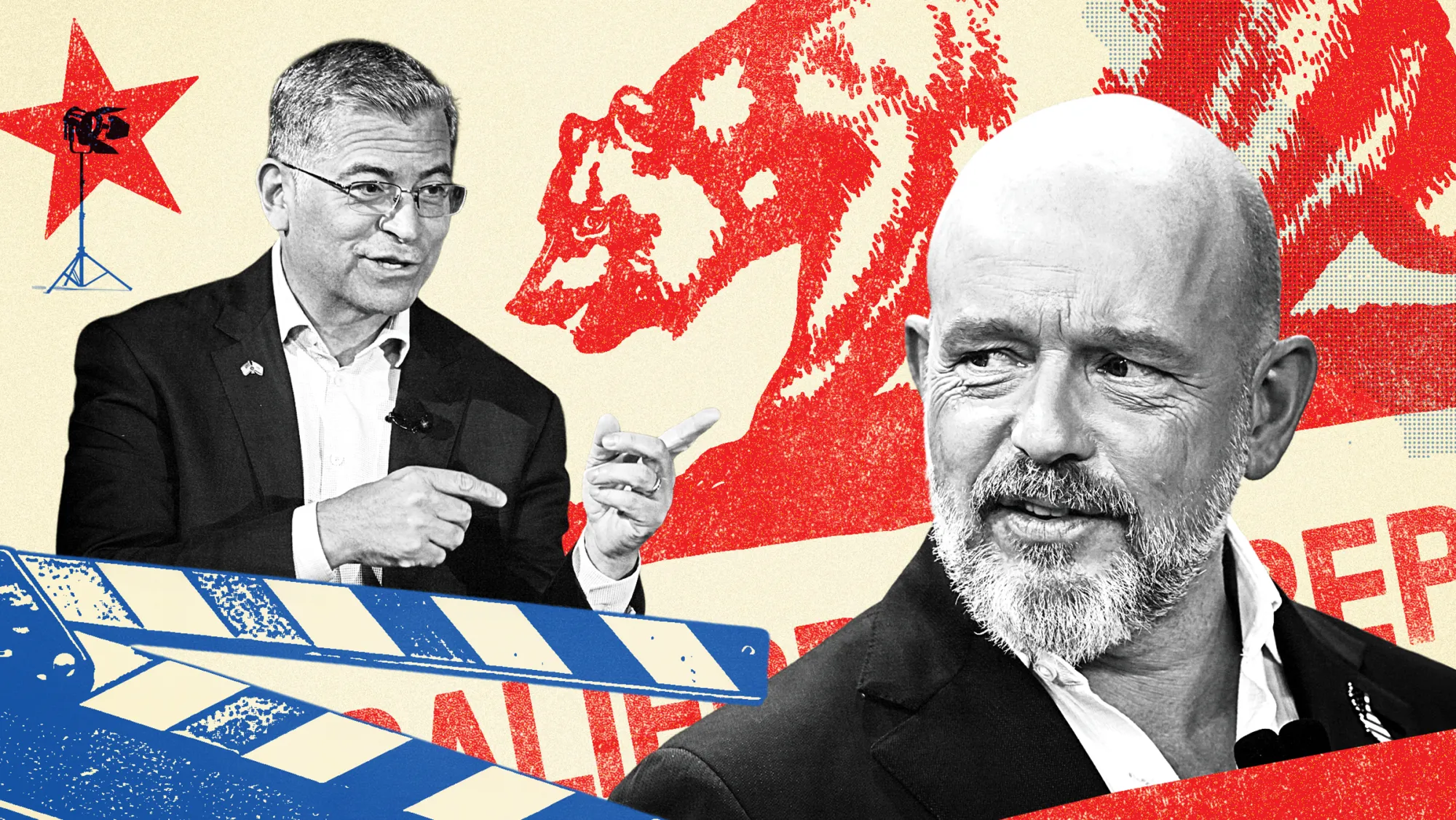
In late April, as the California gubernatorial race intensified, Steve Hilton’s campaign strategists grappled with how to demonstrate a genuine commitment to Hollywood’s welfare. Hilton proposed a dramatic escalation of the state’s entertainment tax credit, suggesting a 60 percent rebate. This move, potentially combined with a federal incentive, aimed to make production in California nearly cost-free, significantly boosting the existing generous tax-break program, which currently offers up to 45 percent, with many productions receiving 35 percent.
Meanwhile, approximately 45 miles away in Glendale, Xavier Becerra, Hilton’s Democratic opponent, faced a different challenge. His campaign had lacked a cohesive industry strategy, largely due to its initial limited scope. However, following the withdrawal of Eric Swalwell due to a scandal and the perceived instability of Katie Porter’s campaign, Becerra’s standing improved, necessitating a swift development of policy proposals.
Becerra eventually introduced a Hollywood-focused plan centered not on tax credits, but on a “California Content Performance Disclosure requirement.” This initiative would mandate that studios and streaming platforms share “meaningful performance data” in a standardized format, enabling workers across various roles, from directors to crew members, to engage in more equitable bargaining.
The apparent progression of both Hilton and Becerra to the general election, coupled with gubernatorial candidates who have vocally committed to supporting Hollywood, underscores the entertainment sector’s adeptness at shaping public discourse. What might have been dismissed as the concerns of industry elites have, through organized guild lobbying and high-profile celebrity advocacy, become a prominent labor issue.
Expressions of support for workers are now common, even from Republican candidates. Hilton’s campaign statement articulated this, asserting, “[This] is not a temporary slowdown. It is one of California’s signature industries being pushed out of its own home land, taking its toll on good, middle-class jobs.”
The situation is indeed critical, with an estimated 51,000 jobs lost over the past three years and the looming threat of further displacement due to artificial intelligence. Industry data indicates that Los Angeles soundstage occupancy rates could decline significantly from the reported 62 percent.
The core dilemma for Hollywood now lies in discerning which of these political contenders can best advance its interests. Discussions with campaign strategists and industry producers reveal that this choice is far from straightforward.
Becerra has shown a reluctance towards substantial tax incentives. Conversely, Hilton’s broader conservative platform, which includes deregulation and proposals for low-density housing, is likely to be met with opposition from many within the liberal-leaning entertainment community.
This electoral dynamic may force voters in the entertainment sector to choose between a candidate whose policies they can tolerate but who offers limited industry support, and a candidate who could provide significant benefits but whose broader agenda is unpalatable.
In contrast, the two leading mayoral candidates in Los Angeles have presented unified, vocal support for the industry. Mayor Karen Bass, in her primary night speech, declared Los Angeles the “creative capital of the world” and vowed to reverse the industry’s exodus. Councilmember Nithya Raman has echoed this sentiment, stating, “Los Angeles is losing Hollywood. Not because productions want to leave, but because we’ve made it too hard for them to stay.”
Both Bass and Raman have outlined plans to support the industry. Bass has implemented an “executive directive to support local film and TV jobs,” while Raman’s platform prioritizes “five immediate priorities” aimed at “bring[ing] Hollywood jobs home.”
However, unlike the governor’s office, the mayor’s office has limited direct influence over production location decisions. While procedural measures like permitting can be significant, they are rarely the primary drivers for production relocation. The most concrete proposal from a mayoral candidate came from Democratic Socialist Rae Huang, who suggested the city acquire and subsidize movie theaters, but she garnered only 3 percent of the vote.
The upcoming mayoral race is expected to feature intense competition for fundraising and celebrity endorsements. Prominent figures such as Samuel L. Jackson and Jane Fonda have already aligned with Mayor Bass, alongside established Democratic figures and the IATSE union.
Some endorsements may shift as Nithya Raman gains momentum. A contingent of celebrities, including Adam Scott, Mindy Kaling, and Michael Schur, have publicly backed Raman’s campaign.
While Bass commands support from the political establishment, Raman benefits from strong ties within the entertainment industry, partly through her husband, Vali Chandrasekaran, whose extensive career has fostered numerous industry relationships. The endorsement of Christopher Lloyd, a creator whose work includes the hit show *Modern Family* on which Chandrasekaran worked, further solidifies Raman’s position. This mayoral contest could significantly reshape the city’s political landscape.
♦♦♦♦♦
Shifting Allegiances in the Entertainment Political Sphere

Despite his public persona, Spencer Pratt’s political impact on Hollywood or any other sector has been limited. His candidacy, despite a compelling message, may have been hindered by his registration as a Republican in a predominantly liberal city. Many of his celebrity supporters were either established entertainment conservatives (Kelsey Grammer, James Woods), figures aligned with the MAGA movement (Joe Rogan, Victoria Jackson), or business personalities whose political affiliations are less defined (Haim Saban, Nicole Avant, Lucian Grainge, Jeanie Buss), alongside reality television personalities from his own sphere.
Pratt’s electoral defeat raises questions about the future political alignment of his supporters. Few are likely to endorse incumbent Mayor Karen Bass, whom Pratt frequently criticized, or progressive challenger Nithya Raman.
Some prominent figures, particularly those whose support for Pratt appeared campaign-specific, such as Katharine McPhee, may withdraw from active political engagement. Others, like Giuliana Rancic, might continue to advocate for specific issues that resonated with Pratt’s platform, such as the condition of the city’s animal shelters.
However, several vocal supporters from the “Pratt Summer” movement, including *Entourage* creator Doug Ellin, may adopt a more critical stance towards both remaining candidates. Ellin has been active on social media, expressing concern over the city’s direction and suggesting that both Pratt and Republican gubernatorial candidate Steve Hilton represented the only viable options for addressing the city’s crisis. He recently stated, “We need change or this city is going to be gone,” while observing what he described as a downtown Los Angeles filled with “homeless zombies.”
Furthermore, outspoken conservatives like James Woods are expected to continue vocalizing criticisms of Democratic leadership. The reactions of other supporters may depend on the candidates’ subsequent engagement and messaging. Following his third-place finish, Pratt had not yet issued a statement, though elements of the MAGA movement, including Donald Trump and Laura Loomer, have already alleged election irregularities due to the extended vote-counting process.
Business Style Takeaway: The entertainment industry’s strategic engagement with political candidates highlights a critical pivot towards leveraging policy levers for survival. However, the resulting ideological divides among potential beneficiaries and political sponsors present a complex challenge for industry leaders seeking unified support and tangible solutions to multifaceted economic pressures.
Original article : www.hollywoodreporter.com