

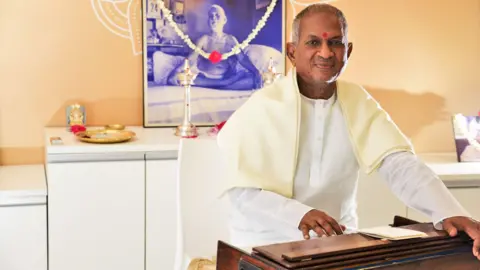
His devoted admirers affectionately refer to him as “the Maestro.” Five decades after his debut, the music of Ilaiyaraaja continues to resonate powerfully across India’s homes, concert halls, and cinematic landscapes.
This 83-year-old composer, hailing from Tamil Nadu, has an astonishing discography of over 1,000 film scores in nine languages, a feat that remains unparalleled in Indian cinema.
He revolutionized the sound of Tamil film music with his 1976 release, *Annakili*, and has since ascended to become one of India’s most profoundly influential musical artists.
“Ilaiyaraaja’s emergence marked a pivotal moment. It was an intervention by an individual from a distinctly different social and aesthetic background, who brought with him a unique and recognizable sonic identity,” observes T.M. Krishna, a distinguished Carnatic musician.
In the context of Indian cinema, playback singing is fundamental; singers lay down tracks that actors later lip-sync on screen, while composers typically craft the film’s entire background score.
Prior to Ilaiyaraaja’s significant impact, much of Indian film music drew heavily from classical Indian traditions. The integration of Western symphonic elements into mainstream soundtracks was a rarity.
However, Ilaiyaraaja, according to Krishna, adeptly drew inspiration from a vast spectrum of global musical traditions.
“The true genius lies in his ability to create a seamless cohesion across the diverse forms he borrows from various musical genres. That is the essence of Ilaiyaraaja’s artistry,” Krishna states.
Following the immense success of *Annakili*, Ilaiyaraaja went on to deliver hit soundtracks across multiple languages, including films like *Pathinaaru Vayathinile*, *Olangal*, *Sadma*, *Geetanjali*, *Chinna Gounder*, and *Nayakan*. His prolific output includes over 8,000 film songs, with a notable infusion of the folk and rural ballad traditions of Tamil Nadu.
Last year, he achieved a significant milestone by becoming the first Indian composer to create and perform a Western classical symphony in London, collaborating with the prestigious Royal Philharmonic Orchestra, an event that was lauded as a “milestone in global music history.”
 Ananda Vikatan
Born R. Gnanathesikan in June 1943 in Pannaipuram, Tamil Nadu, Ilaiyaraaja’s early life was steeped in the folk songs and ballads his father, a cardamom estate supervisor, would sing. Tragically, his father passed away when Ilaiyaraaja was just seven years old.
“My mother, Chinnathayammal, shouldered the entire household responsibility after his death. We faced incredibly difficult times,” recounts Gangai Amaran, Ilaiyaraaja’s younger brother and a respected music director in his own right.
Emerging from a background of poverty and social marginalization, Ilaiyaraaja had limited prospects for advancement. Yet, music was an ever-present force in his life. His elder brother, the singer and playwright Paavalar Varadharajan, was active in performing at Communist Party events during the 1950s, a period when the party held considerable sway in the region.
“We would travel from village to village with our elder brother. This immersive experience was how we absorbed the folk and rural musical traditions,” Amaran shared.
When Varadharajan fell ill shortly before a scheduled performance, their mother encouraged Ilaiyaraaja to step in. This marked his very first public musical appearance.
Forced to leave formal schooling at the age of 14, he relocated to Madras (now Chennai) with his brothers in 1968, seeking opportunities in the film industry. He later recalled the arduous journeys, often walking considerable distances to save bus fare and frequently enduring hunger.
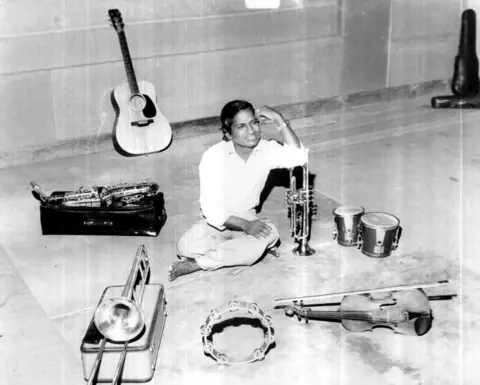
Under the tutelage of Dhanraj Master, he embarked on a rigorous study of Western music, mastering the guitar and piano, while deeply immersing himself in the works of classical composers such as Bach, Beethoven, Mozart, and Schubert.
“It’s an innate gift. Learning and mastering musical instruments came to him with remarkable naturalness,” Amaran remarked.
 Stills Ravi
In 1969, he commenced his professional journey as an assistant to the renowned film composer G.K. Venkatesh.
“G.K. Venkatesh was my mentor, my guru, and he significantly encouraged me to compose orchestral scores,” Ilaiyaraaja reflected in a later interview.
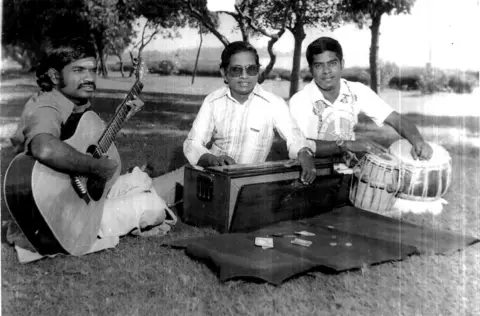
He subsequently established himself as a guitarist and began crafting his own original film music compositions.
His early years in Madras were characterized by a demanding schedule: music studies at dawn, recording sessions throughout the day, and returning home close to midnight.
He contributed to over 200 films alongside Venkatesh and other composers, meticulously refining his skills and building crucial industry relationships.
His significant breakthrough arrived when Panchu Arunachalam, the writer and lyricist for *Annakili*, invited him to showcase his musical prowess to the film’s production team.
“There were no musical instruments in the room. He utilized a wooden table as a percussion instrument and sang. Nevertheless, the producer was thoroughly impressed,” recounts Amaran.
Arunachalam also bestowed upon the young musician, then known simply as Raaja, the more resonant name “Ilaiyaraaja,” signifying “young king.”
The phenomenal success of *Annakili* propelled Ilaiyaraaja to widespread fame and led to a surge of film offers.
 Stills Ravi
The late 1970s and 1980s marked a transformative period for music consumption in India. Previously, music was primarily accessed through state-run radio or vinyl records, often played in shops and community gathering spaces.
“The introduction of cassette tapes and more affordable audio systems empowered individuals to listen to music at their convenience. Ilaiyaraaja’s arrival coincided perfectly with these technological shifts,” notes Shaji Chen, a music critic.
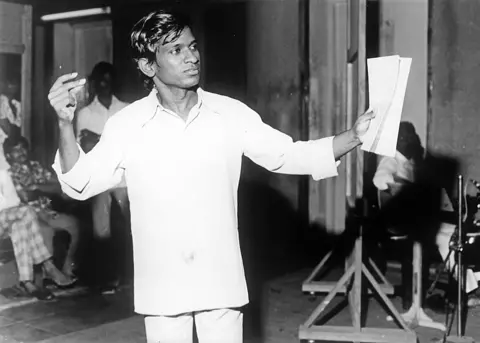
He swiftly became the most in-demand composer in South Indian cinema. Audiences would express their fervent appreciation with showers of confetti, enthusiastic applause, and whistles whenever his name appeared in the film’s opening credits. Many patrons would watch films repeatedly solely to experience his songs, and during his peak, he composed music for over 50 films in a single year.
In numerous instances, the music itself served as the primary draw, contributing significantly to films enjoying extended theatrical runs of over 100 days.
“He possesses a profound understanding of a film’s emotional nuances and thematic core. He masterfully evokes those very emotions, which is why his scores are so distinctive,” explains Suanshu Khurana, another music critic.
Among his most revered compositions is “Rakkamma Kaiya Thattu” from *Thalapathi* (1991), a celebrated gangster drama loosely inspired by the epic *Mahabharata*.
This iconic song ingeniously merges Tamil folk melodies, Carnatic musical elements, and Western classical forms like fugue and polka, employing shifting tempos and rhythmic finger snaps to connect its diverse sections.
In a 2002 poll conducted by BBC World Service, the song was recognized as the fourth most popular globally.
 Ananda Vikatan
A musician of relentless innovation, Ilaiyaraaja possessed the remarkable ability to seamlessly blend elements of Carnatic ragas, traditional Indian folk melodies, and the compositions of Western masters like Schubert and Mozart into a single, cohesive piece.
During a recent performance of his “Valiant Symphony” in Chennai, he eloquently explained how he incorporated Schubert’s “Unfinished Symphony” into “Idhayam Pogudhey,” a song from the 1979 Tamil film *Puthiya Vaarpukkal*.
“These styles originated from different cultures. But my aim was to demonstrate that they are not fundamentally different; rather, they share a common essence,” he stated.
Ilaiyaraaja reigned supreme in Tamil film music until the emergence of A.R. Rahman in the early 1990s. Prior to his illustrious composing career, Rahman spent several years honing his skills as a keyboardist in Ilaiyaraaja’s orchestra.
In 2019, at a public event, Rahman described his time working with Ilaiyaraaja as akin to attending a masterclass. “His entire life has been a profound source of inspiration for me,” he shared.
Ilaiyaraaja continued to be a dominant force, composing hit scores for films such as *Nizhalkuthu*, *Virumaandi*, and *Cheeni Kum*. He also produced albums inspired by ancient Tamil literature and devotional works, including *Thiruvasagam*. In 2018, he was honored with the Padma Vibhushan, India’s second-highest civilian award.
Now 83, Ilaiyaraaja continues to compose music for a select number of films each year. He recently presented his “Valiant Symphony” in Chennai and Bengaluru and undertakes international tours for his concert performances.
A new generation is discovering Ilaiyaraaja’s extensive catalogue through streaming platforms and viral remixes. The 1983 Malayalam song “Kiliye Kiliye” recently experienced a resurgence in popularity after being featured in the film *Lokah Chapter 1: Chandra*.
In recent years, he has also been prominently in the news regarding legal disputes over music royalties and the unauthorized utilization of his compositions.
His ascent significantly challenged long-standing social barriers within Carnatic music, a field historically dominated by upper-caste musicians and largely inaccessible to performers from marginalized communities.
Ilaiyaraaja’s profound mastery of this musical form played a crucial role in dismantling these entrenched hierarchies.
“Through his music, he transcended social and caste barriers,” remarks Krishna.
Business Style Takeaway: Ilaiyaraaja’s journey from humble beginnings to global musical icon underscores the power of cultural fusion and artistic innovation. For businesses and brands aiming for international resonance, understanding how artists like Ilaiyaraaja integrate diverse traditions to create universally appealing art offers profound insights into authentic global storytelling and cross-cultural connection.
Based on materials from : www.bbc.com