

Experiencing new cultures and historical marvels can be profoundly restorative, offering a valuable respite from the demands of professional life. Engaging with ancient wonders can provide perspective, foster mental clarity, and encourage a renewed sense of purpose.
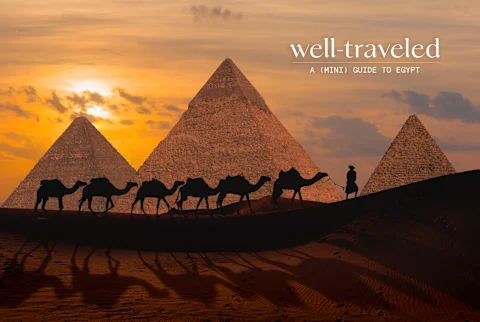
Egypt, a land steeped in millennia of history, often exists in our collective imagination as a tapestry of ancient textbooks, documentary backdrops, and cinematic narratives. It is a destination that resonates deeply with history enthusiasts, beckoning them to witness the sole surviving Great Wonder of the ancient world, the Great Pyramid. Yet, for many, it remains a dream trip, perpetually on the horizon, deferred indefinitely.
A natural question arises: can this legendary land truly meet the immense weight of expectation? The answer is a resounding yes. The sheer scale and profound antiquity of its preserved temples, pyramids, monuments, and relics evoke a sense of awe that is truly unparalleled.
Thus, the contemplation should not be whether to visit, but rather how to best curate your experience to maximize its impact.
Based on a comprehensive nine-day exploration of Cairo and Luxor, here are key recommendations for an enriching journey.
Cairo: The Vibrant Capital
Many journeys into Egypt commence in Cairo, the nation’s bustling capital. This sprawling metropolis is the gateway to the country’s most iconic archaeological sites, world-class museums, and monumental landmarks. While a week could be dedicated to its exploration, a focused itinerary of two to three days can effectively capture its essential highlights.
Consider the following curated experience:
Strategic Itinerary Planning
The ensuing three destinations are considered indispensable for any visitor to Cairo. With strategic planning, they can be explored within approximately a day and a half. Should your schedule permit an extension to at least three days, incorporating additional sites will further enrich your visit.
The Pyramids of Giza & the Sphinx
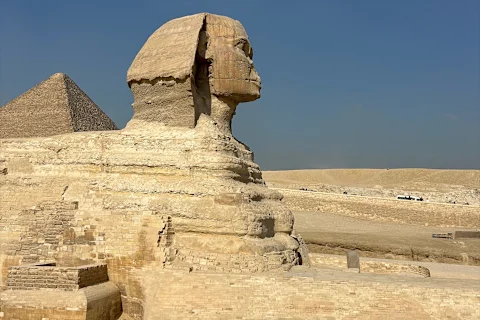
The Giza Plateau is renowned for its three majestic pyramids: the Great Pyramid of Khufu, the Pyramid of Khafre, and the Pyramid of Menkaure. Despite years of exposure through imagery, their sheer magnitude remains astonishingly impactful when witnessed firsthand.
The site is vast, encompassing numerous smaller pyramids and temples. Dominating the foreground is the Great Sphinx, an immense limestone sculpture depicting a mythical creature with a lion’s body and a pharaoh’s head, stretching to a length comparable to a commercial aircraft.
Choosing accommodation with a view of the pyramids offers a unique opportunity to absorb their grandeur beyond the typical tour experience.
The Egyptian Museum
This esteemed institution houses an unparalleled collection of Egyptian antiquities, chronicling thousands of years of history from pre-dynastic periods through the Greco-Roman era. Its extensive holdings include over 100,000 artifacts: statues, intricate jewelry, remarkably preserved mummies, sarcophagi, papyrus scrolls, and monumental stone carvings salvaged from across the country.
The collection of King Tutankhamun’s treasures, featuring the iconic gold funerary mask, ornate accoutrements, and ceremonial objects discovered in his tomb, is particularly captivating.
The sheer density of artifacts is overwhelming, with galleries filled from floor to ceiling with relics of ancient Egypt.
Navigating the museum can be bustling, often shared with large tour groups and school excursions. Engaging a guide can personalize the experience, focusing on areas of particular interest and accommodating time constraints, allowing for either an immersive full-day visit or a more focused exploration over several hours.
Saqqara
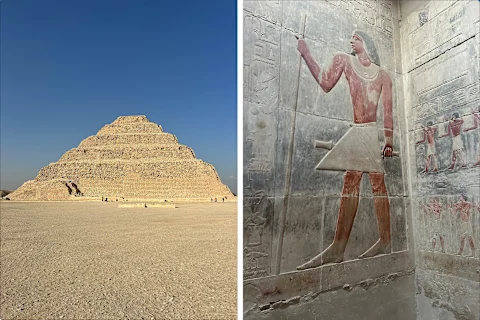
Located approximately an hour outside Cairo, amidst the desert landscape, lies Saqqara, one of Egypt’s most significant archaeological zones. It is home to the Step Pyramid of Djoser, the oldest pyramid in Egypt, dating back over 4,500 years.
The site also features numerous smaller pyramids and the richly decorated tombs of Old Kingdom nobles. Many of these tombs retain remarkably vibrant hieroglyphics, with red and blue pigments still vividly apparent on their walls and ceilings despite their extreme age.
In contrast to the busier atmosphere at Giza, Saqqara offers a more tranquil and expansive setting, facilitating a deeper appreciation of its intricate details.
Dahshur
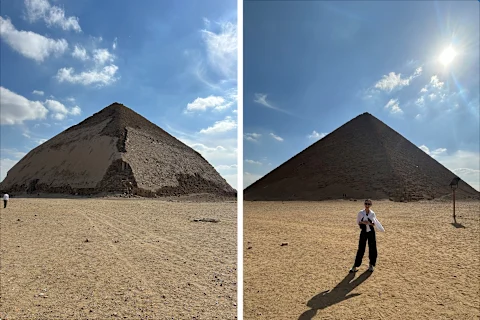
Dahshur, visited shortly after arrival in Cairo, proved to be an unexpectedly memorable site. The area features two principal pyramids: the Red Pyramid, named for the distinctive hue of its limestone, and the Bent Pyramid, characterized by a visible change in its angle partway up its structure.
Access is permitted within both pyramids. However, a guided recommendation favors the Red Pyramid due to potential bat presence and a stronger odor in the Bent Pyramid.
Entering requires navigating a long, narrow tunnel that descends deep into the pyramid before opening into a series of unadorned chambers. While devoid of inscriptions, the experience of physically standing within these ancient edifices is profound.
Memphis
Once the ancient capital of Egypt, Memphis now functions as an open-air museum showcasing artifacts and statuary recovered from its former glory. The site primarily features large-scale sculptures, including a colossal limestone statue of Ramses II and a massive alabaster sphinx, alongside scattered remnants of ancient temples and monuments.
A brief visit, lasting just over an hour with a guide, offers a glimpse into its historical significance.
Mosque of Muhammad Ali
Perched within Cairo’s historic Citadel, the Mosque of Muhammad Ali stands as one of the city’s most iconic landmarks. Its architecture is defined by soaring domes, slender minarets, intricate chandeliers, and expansive marble interiors. It also contains the tomb of Muhammad Ali Pasha, the Ottoman ruler widely credited as the architect of modern Egypt.
Luxor: A Tranquil Oasis
Following the dynamic pace of Cairo, Luxor offers a refreshing contrast, providing a more serene atmosphere.
Situated along the Nile River in southern Egypt, Luxor is home to numerous celebrated temples and tombs from the New Kingdom period. Many of these structures, dating back over a millennium later than the pyramids near Cairo, are remarkably well-preserved.
Optimized Exploration in Luxor
A minimum of three days is strongly recommended for a thorough exploration of Luxor’s significant sites.
Valley of the Kings
Among Luxor’s most renowned attractions, the Valley of the Kings served as the burial ground for New Kingdom pharaohs, including Tutankhamun. Carved into the desert hills on the West Bank, the site is far more expansive than anticipated, with tomb entrances dispersed throughout the valley.
Most general admission tickets grant access to several tombs, though researching preferred tombs in advance is advisable as some require separate entry fees. Inside, the tombs are characterized by long, vibrantly decorated corridors adorned with hieroglyphics and painted scenes intended to guide the deceased pharaohs through the afterlife. While certain popular tombs can become crowded, the preservation of the artwork is truly exceptional.
The nearby Valley of the Queens, though not visited, is also highly regarded and recommended if time permits.
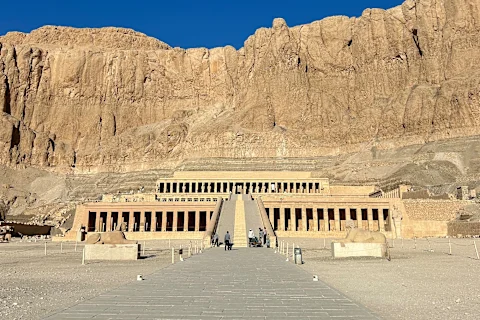
Temple of Hatshepsut
Having learned about Hatshepsut, the female pharaoh of the New Kingdom, prior to the visit, witnessing the grandeur of her mortuary temple in person was a moment of profound awe. The site boasts towering colonnades, striking statues, and intricate relief carvings that narrate the story of her reign.
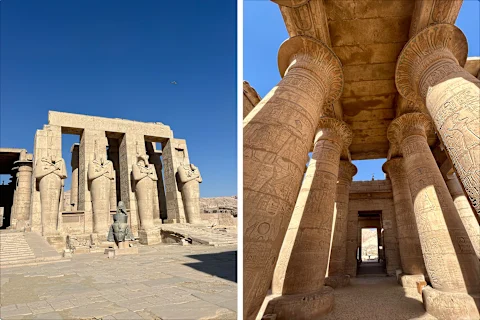
Ramesseum
The Ramesseum, the mortuary temple of Ramses II, emerged as a personal favorite in Luxor. This complex features colossal columns, fallen statues, open courtyards, and intricately carved hieroglyphs. Being slightly off the main tourist path, it offered a more intimate experience with only one other small group present, affording a near-private tour.
Karnak
Karnak stands as the most frequented site in Luxor, yet it is undeniably one of the most magnificent. This vast temple complex, developed over nearly two millennia, includes the Avenue of Sphinxes, the Great Hypostyle Hall—a breathtaking space with 134 towering sandstone columns—and a sacred lake.
Strategic Planning for Your Journey
A trip to Egypt necessitates meticulous planning; it is not a destination best explored spontaneously.
Options include collaborating with a travel agent for a bespoke itinerary complete with a dedicated driver and guide, embarking on a Nile cruise, or joining a structured group tour with a predetermined schedule.
Opting for a structured tour resulted in a seamless experience. The chosen equestrian holiday seamlessly integrated riding excursions with sightseeing. The Egyptologist guides were consistently knowledgeable, alleviating any navigational concerns within the bustling urban environments.
For those arriving prior to the official tour commencement, pre-arranged day tours can be exceptionally beneficial, particularly for equestrian enthusiasts.
Business Style Takeaway: Immersing oneself in the historical grandeur of Egypt offers a unique opportunity for mental recalibration, providing a profound sense of perspective that can enhance focus and reduce stress. This deliberate engagement with the past can foster greater resilience and clarity, ultimately boosting long-term productivity and executive decision-making.
Source: : www.mindbodygreen.com