

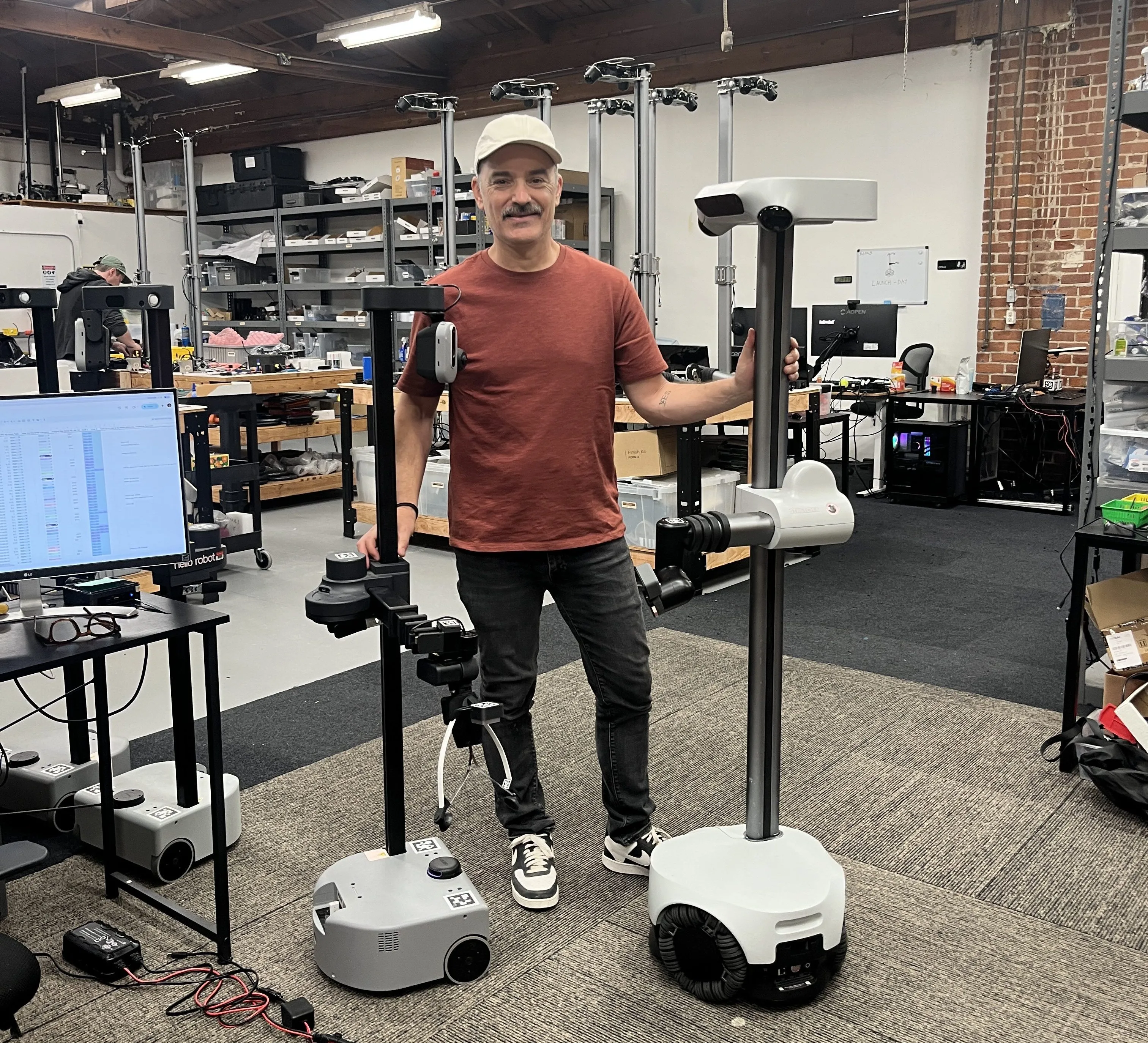
Martinez, California, a locale geographically distant from the epicenter of Silicon Valley, is nevertheless situated within the San Francisco Bay Area. This modest city serves as the operational base for Hello Robot, a startup that distinguishes itself from the ambitious, often maximalist, aspirations of its robotics competitors located some 45 miles to the south.
Hello Robot recently unveiled the fourth iteration of its domestic assistance robot, named Stretch. While not a humanoid robot in the conventional sense, Stretch features a vaguely human-like torso and a sensor-equipped head. Its defining characteristic is a telescoping arm terminating in a pair of pinchers, all mounted on a substantial, omnidirectional wheeled base.
An engineer at the company, Blaine Matulevich, humorously notes that when Stretch’s batteries deplete, the lights around its “eyes” illuminate, giving it an “angry” appearance.
Hello Robot, established in 2017 by CEO Aaron Edsinger—a former director of robotics at Google—and CTO Charlie Kemp, a professor at the Georgia Institute of Technology, is charting a different course. The company is not focused on foundational models or broad claims of replicating human capabilities. Instead, Hello Robot has engineered Stretch to address a critical gap in the robotics sector: performing tasks within actual homes, alongside people, at a time when most advanced robots remain confined to laboratory settings.
This focus on real-world deployment is particularly significant. While recent advancements in artificial intelligence are enhancing robot capabilities, there exists a notable deficiency in acquiring relevant, practical training data. Although simulation technologies are advancing, investors are increasingly prioritizing tangible deployment metrics.
“Companies that achieve early deployment accumulate site-specific recovery loops and workflow tolerances that are impervious to purchase or synthesis by competitors,” noted a recent report on the sector by Bullhound Capital. “In the realm of robotics, the competitive moat is not solely defined by intellectual property but by accumulated operating hours under genuine real-world liability.”
A Different Kind of Embodiment
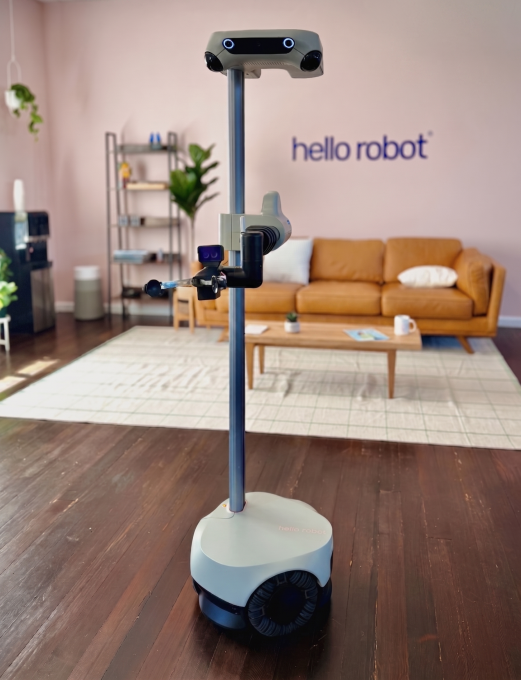
Keith Platt, an investor from Georgia and a member of Hello Robot’s board, was compelled to invest after integrating Stretch into his daily life. Platt, who became quadriplegic in 2021 and retains limited control over his shoulders, neck, and head, has been exploring adaptive technologies. Since 2024, he has collaborated with Hello Robot, which employs an occupational therapist to support its work with Platt and other individuals with similar physical conditions.
Platt operates his Stretch unit via a voice-controlled iPhone application. He can direct the robot to navigate autonomously within his home, subsequently taking manual control to interact with objects and perform specific tasks. A notably challenging yet rewarding endeavor has been enabling Stretch to prepare a protein shake for his breakfast, a task typically requiring human assistance.
“Initially, undertaking this activity independently—with no one else present—took nearly two hours,” Platt stated. “However, I was determined. Eventually, I refined the process to the point where I could consume the entire shake and return the container to the counter within a few minutes.”
Platt emphasizes the profound physical and emotional impact of dependency. Regaining autonomy in tasks such as putting on or removing reading glasses, or brushing his teeth, represents a significant achievement, not only for himself but also for his loved ones.
He posits that robotic assistants enabling individuals with mobility impairments to manage their day safely at home could be “life-changing” for families, freeing up relatives to pursue work or leave the house without the need to hire professional caregivers.
Stretch is intentionally designed with limited inherent autonomy at the factory level. The company prioritizes maintaining human oversight. “Being in control is a desired feature, integral to the robot’s embodiment,” Matulevich commented.
Furthermore, Platt notes the reduced concern regarding the robot experiencing falls due to operational errors.
The Challenge of Physical Hardware
Despite substantial investment in startups developing sophisticated AI for robots, the physical embodiment of these machines continues to present significant challenges. While component costs are decreasing, state-of-the-art robotic limbs remain heavy and necessitate high-energy active balancing systems. The mass of robotic hands and arms, coupled with fundamental physics, poses considerable engineering hurdles compared to their human counterparts.
Robot errors can result in damage to surroundings. One notable case involves a lawsuit filed by a San Francisco Airbnb owner against The Bot Company, alleging that the startup’s robot caused damage to furniture, appliances, and bathroom tiles while being tested in his apartment.
“The current state of robotics hardware is quite rudimentary when considering deployment in environments like a parent’s home,” observed Mahi Shafiullah, a postdoctoral researcher specializing in robotic hands at the University of California, Berkeley. He recounted an instance in his lab where industrial robots, tasked with delicate manipulation, inadvertently damaged a children’s play kitchen set.
Shafiullah utilized the third-generation Stretch robot from Hello Robot for his doctoral research at New York University. Models developed with Stretch received accolades, including the best demonstration award at the preceding Computer Vision And Pattern Recognition (CVPR) conference.
Hello Robot does not claim Stretch possesses the complexity or capabilities of the high-profile humanoid robots that capture Silicon Valley’s attention. However, its more focused design may offer greater practical utility. CEO Aaron Edsinger draws a parallel between Hello Robot and Waymo, suggesting that the company’s methodical approach, prioritizing safety—analogous to Waymo’s early focus—could lead to market leadership, acknowledging that funding also plays a crucial role.
A significant development in the field was the unveiling of Neo, a humanoid robot from 1X designed for domestic chores, which garnered considerable attention last year. The company reported that its initial production run of 10,000 units for the year is sold out, though none have yet been delivered.
“Hello Robot has approached this problem with remarkable caution and diligence, I believe because they are designing the robot to operate safely around people first,” Shafiullah remarked. “Their focus is on integrating capabilities within these safety constraints.”
The Path to Domestic Integration
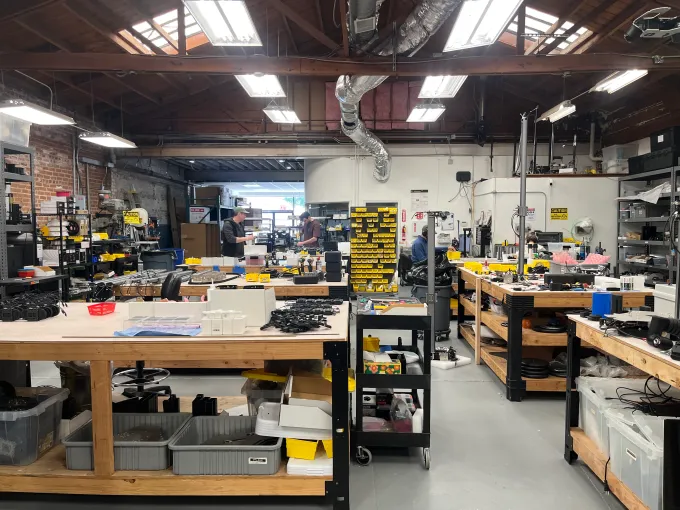
Priced at $30,000, Stretch 4 is positioned as an accessible, albeit premium, robotic solution. While this figure exceeds that of some Chinese-manufactured robots, Edsinger points out that such comparisons often exclude essential components like sensors and software, which can significantly inflate the final cost. Hello Robot anticipates manufacturing between 200 and 300 units at its Martinez facility, with the initial production batch already having been sold.
Edsinger’s strategy involves maintaining accessibility for independent researchers and hobbyists with limited budgets. A core design principle for Stretch is its ability to be shipped in a standard cardboard box via carriers like UPS or DHL. The necessity for wooden crates and professional installation teams, as required by more complex systems, would invariably increase costs and diminish accessibility.
Hello Robot’s clientele encompasses academic researchers utilizing Stretch for advanced AI algorithm testing, enterprise clients assessing its utility in environments such as data centers, and developers creating assistive technologies for individuals with disabilities.
The convergence of Stretch’s comprehensive sensor array, physical manipulation capabilities, and emphasis on safe operation positions it as a potentially key player in realizing the promise of embodied artificial intelligence in domestic settings.
“The algorithms may be advanced, but the critical limitation is the lack of data; data constitutes approximately 80% of the essential factors,” Shafiullah explained.
The availability of a robot capable of safely collecting such data represents a substantial advancement. Hello Robot intends to continue its iterative development process. Insights gleaned from the deployment of Stretch 4 are expected to inform the design of its subsequent robot models, potentially lowering costs and enhancing capabilities to a degree that facilitates genuine human-robot collaboration within the home environment.
Business Style Takeaway: Hello Robot’s focus on practical, safe domestic deployment, rather than solely on theoretical advancements, highlights a critical market need for robotics that can operate effectively in real-world environments. This strategy, prioritizing user-driven data acquisition and iterative hardware development, may provide a more sustainable competitive advantage than purely software-centric AI advancements in the long term.
Information compiled from materials : techcrunch.com