

The Director-General of the World Health Organization, Tedros Ghebreyesus, visited Bunia, the central point of the Ebola outbreak in the Democratic Republic of the Congo’s Ituri province, on Saturday. This visit occurred as cases of the deadly disease continue to escalate, prompting meetings with local officials.
Timeline of Events
SATURDAY, MAY 30, 2026
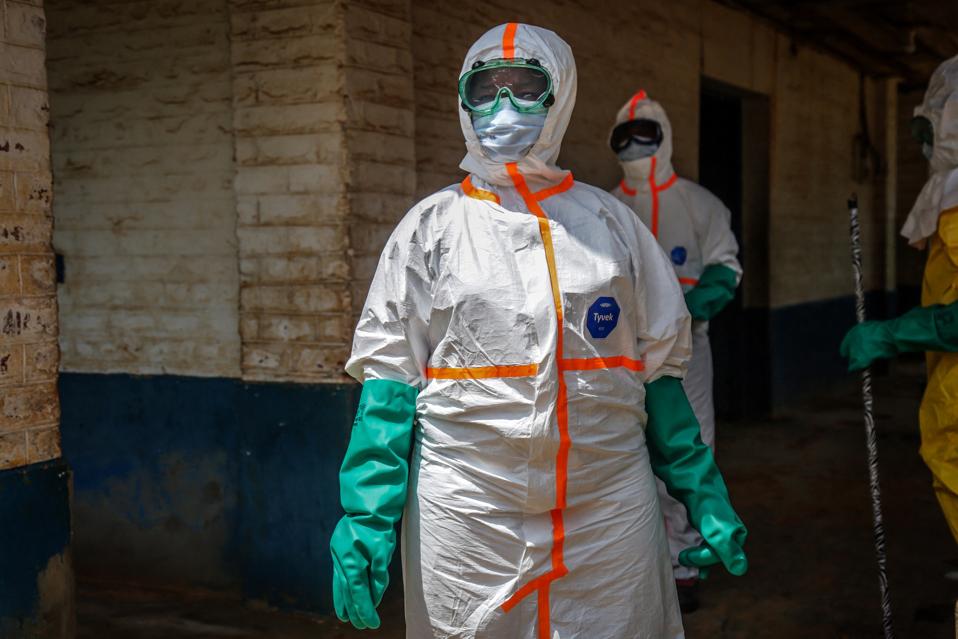
Tedros Ghebreyesus visited Bunia and stated that he had briefed the Prime Minister on the WHO’s collaborative efforts with various partners to support the government’s response to the outbreak. The WHO reported 134 confirmed cases of Ebola and 18 associated deaths among confirmed cases in the Democratic Republic of the Congo and Uganda. As of May 27, there were 906 suspected cases and 223 deaths.
FRIDAY, MAY 29, 2026
Reports indicated that a Kenyan court had issued an order, without a specified end date, to temporarily halt the establishment of an Ebola quarantine center. The Trump administration had expressed hopes for this facility to be operational by Friday. Health officials in Kenya have voiced criticism regarding the plan to construct such a facility primarily for foreigners, particularly in a nation with no recorded cases of Ebola. Davji Atellah, secretary general of the local doctors’ union, told The New York Times, “This quarantine center is American-focused. There are no plans for Kenyans who get infected by Ebola.”
The World Health Organization announced the first successful recovery of a patient confirmed to have contracted Ebola during the ongoing outbreak in the Democratic Republic of Congo.
New York’s John F. Kennedy International Airport, a major hub for international arrivals, was designated as the fourth U.S. airport where passengers traveling from Congo, Uganda, or South Sudan within the preceding 21 days would undergo health screenings upon entry, as confirmed by U.S. Customs and Border Patrol.
MAY 28, 2026
The number of suspected Ebola cases increased to 1,084, with over 250 deaths recorded.
WHO Director-General Tedros Ghebreyesus traveled to Congo and issued an open letter to residents affected by the outbreak, appealing to local militias for a ceasefire and urging young people to “share what you know about Ebola” and “help break the fear and silence that allow this virus to spread.”
Ghebreyesus stated that the WHO was working to enhance Ebola diagnostic capabilities in Congo to facilitate earlier case identification and contain the rapidly spreading disease. He also highlighted the significant challenges faced by health officials in the region, including a decades-long ethnic conflict, the spread of misinformation, and general distrust.
MAY 27, 2026
The administration of President Donald Trump confirmed its involvement in constructing a quarantine and treatment center in Kenya. Americans evacuated from the Democratic Republic of the Congo, the epicenter of the Ebola outbreak, would be housed and potentially treated at this Kenyan facility, thereby avoiding “the risks of a lengthy transport back to the US,” according to the White House. This approach represented a significant departure from previous Ebola outbreaks where U.S. citizens were repatriated for treatment in specialized medical units.
Jennifer Nuzzo, director of the Pandemic Center at the Brown University School of Public Health, commented to The Guardian on this decision, stating, “It is shocking to me that the administration is looking to prevent Americans from coming home to receive the proven world-class care that our taxpayer-funded biocontainment and treatment units are equipped to provide.”
Officials in Uganda mandated the closure of its border with the Democratic Republic of the Congo, despite guidance from the WHO suggesting that such measures are typically implemented out of fear and lack scientific justification.
Ghebreyesus issued a warning that the DRC was at risk of a “catastrophic collision of disease and conflict” and called for an immediate ceasefire among local militias, emphasizing, “We cannot build community trust or isolate the sick while bombs are falling.”
MAY 26, 2026
Americans who had potential exposure to the ongoing Ebola outbreak in Africa were to be sent to Kenya for observation and treatment by specially trained Public Health Service officers, as reported by The New York Times. This differed from the protocol for individuals exposed during past Ebola outbreaks, who were brought back to the United States for treatment in specialized medical units.
The International Rescue Committee (IRC) cautioned that the combination of regional conflict, rapid disease spread, and substantial funding cuts to global health programs could lead the current Ebola crisis to surpass the severity of the 2018-2020 outbreak in the Democratic Republic of the Congo, which resulted in over 2,290 fatalities.
Dr. Peter Stafford, an American missionary who contracted Ebola while working in Congo and is currently undergoing treatment in Germany, is reportedly “doing a lot better,” according to a college and fellow evacuee who spoke to The Washington Post.
Researchers in England indicated that they were months away from initiating clinical trials for a new experimental Ebola vaccine, with animal testing already underway. This vaccine holds potential for aiding in the containment of the ongoing emergency.
Houston’s Bush Intercontinental Airport was established as the third U.S. airport equipped to conduct Ebola health screenings. Passengers who had visited certain African nations within the last 21 days were now required to undergo symptom checks at airports in Houston, Atlanta, or Washington D.C. before being permitted to travel domestically.
MAY 25, 2026
The Africa Centres for Disease Control and Prevention identified 10 African countries as being at risk amid the ongoing Ebola outbreak. World Health Organization officials urged international cooperation, cautioning that “no single country can respond to this magnitude of outbreak alone.”
During a meeting of continental health leaders, Africa CDC Director General Dr. Jean Kaseya stated, “This is too much. We cannot afford to have more Africans dying.”
Ghebreyesus warned, “at the moment, the epidemic is outpacing us.”
MAY 24, 2026
A group of young men reportedly stormed a hospital treating Ebola patients in the DRC, firing weapons as they attempted to retrieve the bodies of deceased relatives. This incident marked the third attack on Ebola treatment facilities within a four-day period, with no immediate confirmation of injuries.
MAY 23, 2026
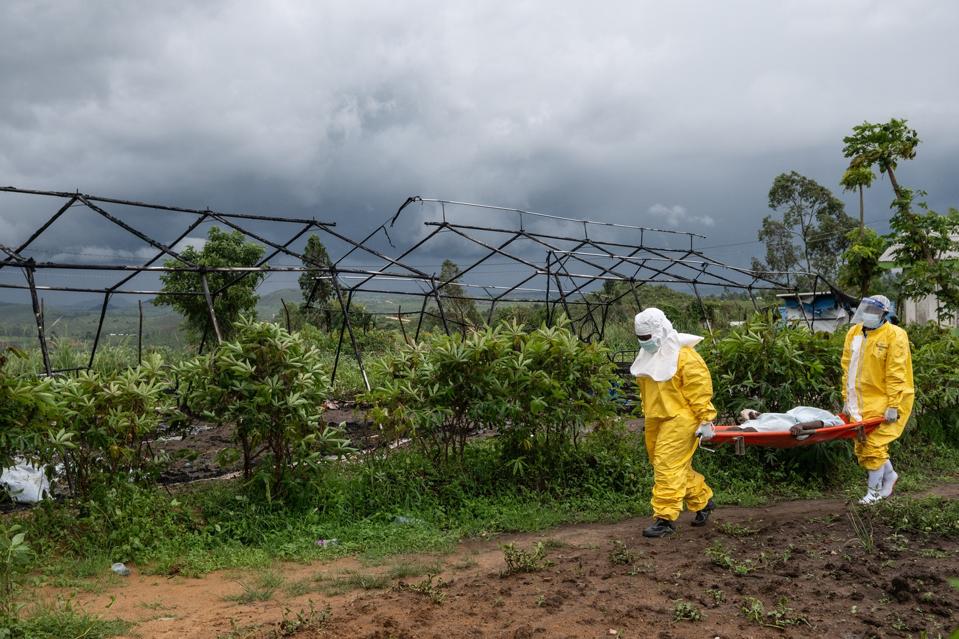
Unidentified assailants set fire to a tent used for treating Ebola victims in Mongbwalu, a town in the DRC’s Ituri Province. During the attack, at least 18 individuals with suspected Ebola cases fled the facility.
MAY 21, 2026
Witnesses reported to the Associated Press that a treatment center and the body of a deceased individual were set ablaze by locals who were denied permission to retrieve the body of a friend. Handling the bodies of Ebola victims poses a significant risk for disease transmission, and authorities in the region are typically responsible for burials.
MAY 20, 2026
An Air France flight en route to Detroit was diverted to Montreal after border patrol agents in France erroneously permitted a passenger to board, who was in violation of new travel regulations barring entry to non-citizens who had recently visited Uganda, the DRC, or South Sudan.
MAY 18, 2026
President Donald Trump expressed “concern” regarding the Ebola outbreak when questioned at the White House. However, the CDC maintained that the ongoing risk to the American public remained “low.”
The CDC and the Department of Homeland Security implemented new travel restrictions pertaining to the Ebola outbreak. These measures included enhanced public health screenings for individuals arriving from affected regions and entry limitations for non-U.S. passport holders who had traveled through Uganda, the Congo, or South Sudan within the preceding 21 days.
MAY 17, 2026
Stat News reported, citing unnamed sources, that several Americans had experienced “high-risk exposures” to Ebola while working in the Congo, with one individual developing symptoms consistent with the disease.
May 15, 2026
The Africa CDC confirmed an Ebola outbreak in the Ituri province of the Democratic Republic of the Congo. Laboratory tests subsequently identified the outbreak strain as Bundibugyo, for which no vaccine is currently available.
Understanding the Conflict in Congo’s Ituri Province
The Hema and Lendu ethnic groups have been engaged in a protracted conflict over land and mineral resources in the gold-rich Ituri province since the Second Congo War in the late 1990s and early 2000s. This conflict has resulted in over 50,000 fatalities, with ethnic militias becoming deeply embedded in local political structures. Despite numerous peace agreements that have temporarily reduced hostilities, the conflict has never been fully resolved. New militias, such as CODECO and Zaïre/FPAC, continue to emerge, perpetuating cycles of reprisal attacks, displacement, and humanitarian crises fueled by institutional distrust and instability.
Key Background Information
By the time the Africa Centres for Disease Control and Prevention reported the outbreak, 246 people had already been infected and 65 had died. The World Health Organization promptly declared the outbreak an “extraordinary event” with the potential to pose a public health risk to multiple nations. The U.S. Centers for Disease Control and Prevention confirmed that several Americans had been exposed while working in the region. Among them were Dr. Peter Stafford, an American missionary who contracted Ebola in Congo and was undergoing treatment at a specialist hospital in Germany, and another American doctor who was also exposed and subsequently transferred to Bulovka Hospital in Prague for care. Several other Americans were evacuated from the area for treatment or monitoring. Within days of the initial outbreak declaration, the first death outside of Congo was reported in Uganda. Ghebreyesus expressed deep concern regarding “the scale and the speed of the epidemic.” Subsequently, five Ebola cases were reported in Uganda, including a Ugandan driver who transported the country’s first confirmed case, a Ugandan healthcare worker who treated the initial patient, and a Congolese woman who entered Uganda exhibiting symptoms.
Ebola Treatment Protocols
Most previous Ebola outbreaks were caused by the Ebola-Zaire strains, for which public health authorities have approved vaccines. However, the current Bundibugyo strain spreading lacks an approved vaccine or specific treatment method. Health officials state that supportive care is the primary approach for infected individuals, involving medications to maintain blood pressure, reduce vomiting and diarrhea, and manage fever and pain. A 2007 Bundibugyo outbreak recorded a fatality rate of 32%, comparable to untreated cases of smallpox and typhoid fever. While researchers at Oxford are investigating the efficacy of their new vaccine against the Bundibugyo strain, the WHO is reportedly considering the use of Merck’s Ebola vaccine, Ervebo. This vaccine targets the Zaire strain, the most common and lethal form of Ebola, though limited evidence suggests it might offer some degree of protection against the Bundibugyo virus.
Significant Figure
17: This represents the number of Ebola outbreaks recorded in the DRC over the past 50 years.
Surprising Fact
The last documented instance of Ebola in the United States was in 2014 during a global outbreak that resulted in 11 cases domestically. Nine of these individuals contracted the virus in West Africa and were subsequently transported to the U.S. for specialized medical treatment; two individuals died. The remaining two cases were nurses who contracted Ebola in the United States after caring for a patient in Dallas; both survived.
Related Insight
The Global Preparedness Monitoring Board, established by the WHO and the World Bank, issued a warning on Monday stating that the world remains unprepared for another pandemic, despite lessons learned from the COVID-19 outbreak six years prior. In a new report, the board highlighted that global health research, prevention, and preparedness efforts have not kept pace with the increasing frequency and intensity of infectious disease epidemics. The report cautioned that any future pandemic would “strike a world more divided, more indebted and less able to protect its people than it was a decade ago.”
Business Style Takeaway: The escalating Ebola outbreak in the DRC, coupled with the complex interplay of conflict, logistical challenges, and international response variations, underscores the critical need for robust global health infrastructure and coordinated pandemic preparedness strategies. Businesses operating in or with ties to affected regions must navigate heightened risks, supply chain vulnerabilities, and the imperative for ethical engagement with public health crises.
Based on materials from : www.forbes.com