

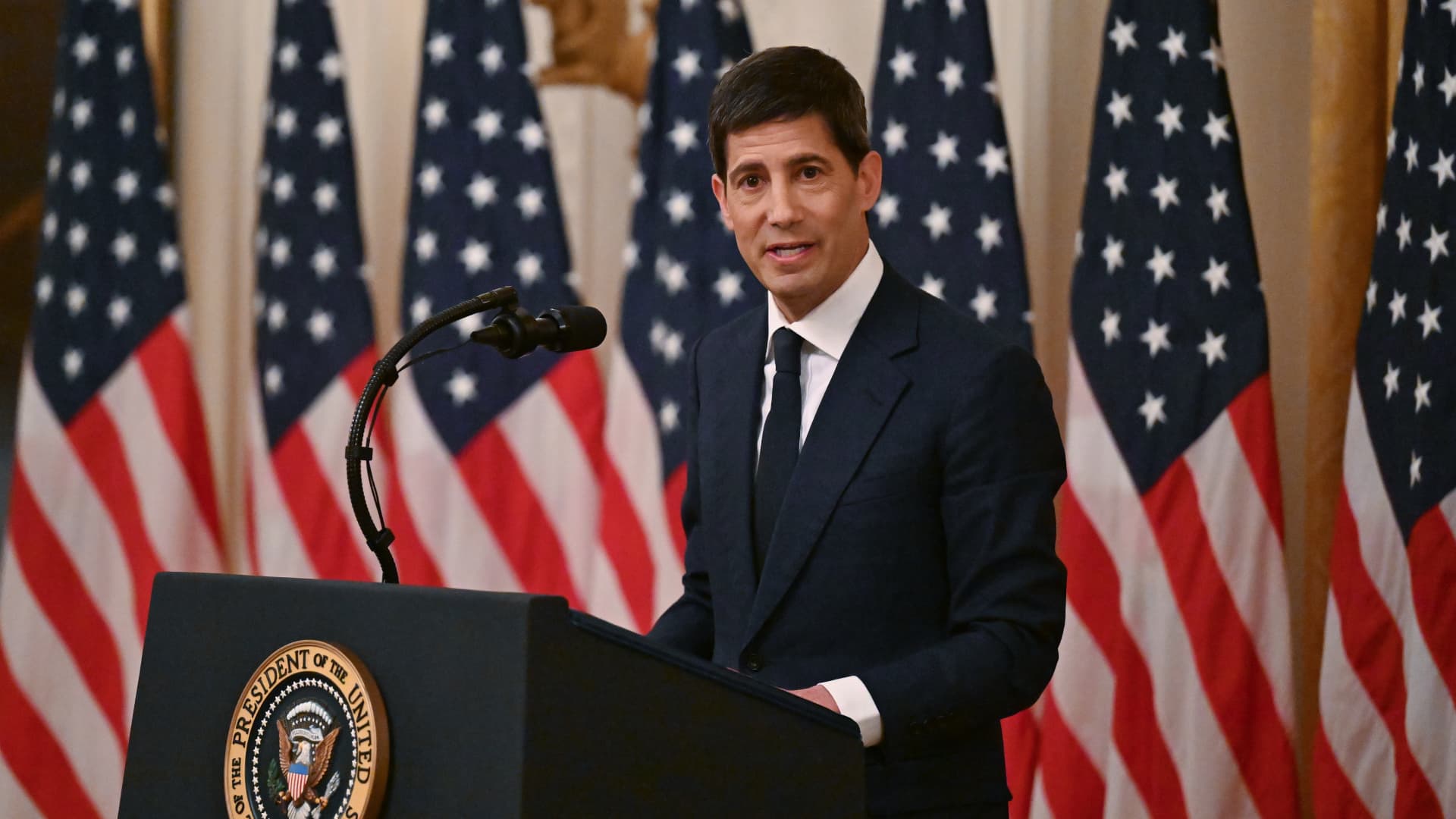
The discourse surrounding potential leadership changes at the Federal Reserve, particularly concerning the pronouncements of incoming Chair Kevin Warsh regarding a “regime change,” has ignited considerable speculation. This discussion extends beyond immediate policy levers such as interest rates or potential shifts in personnel, venturing into more fundamental alterations in the central bank’s operational framework and communication strategies.
However, the most significant implications may manifest in a more subtle, yet potentially consequential, re-evaluation of how the Fed manages the intricate financial plumbing of the U.S. economy and the substantial balance sheet accumulated over nearly two decades of crisis management.
Insights gleaned from discussions with former Fed officials and economists, corroborated by a growing body of academic research, suggest that Warsh might steer the central bank towards a diminished role in the day-to-day functioning of financial markets. Concurrently, there’s a potential for the establishment of more clearly defined parameters governing the Fed’s intervention timing and methodologies.
At its core, the ongoing debate revolves around whether the Federal Reserve should continue to deploy its balance sheet as a routine instrument for influencing financial conditions and providing market support – a practice prevalent throughout much of the post-2008 financial crisis era – or whether its use should be reserved exclusively for periods marked by significant market dysfunction and severe economic distress.
Revising the Federal Reserve’s Operational Playbook
The intricacies surrounding the management of the Federal Reserve’s $6.8 trillion balance sheet, while technical and often overshadowed by more mainstream policy discussions, carry substantial economic ramifications. Since the seismic events of the 2008 financial crisis, the Fed has actively utilized its holdings of Treasury securities and mortgage-backed debt as a critical tool to stabilize markets and shape broader financial conditions.
In the pre-crisis period, the Fed’s balance sheet was comparatively modest, hovering around $800 billion. However, its size expanded dramatically, peaking at approximately $9 trillion. Currently, the Fed’s asset holdings represent roughly 23% of the U.S. economy’s gross domestic product, a magnitude some seven times greater than its pre-financial crisis footprint.
Any concerted effort to recalibrate this operational framework could trigger wide-ranging consequences. Potential impacts include shifts in Treasury yields, mortgage rates, and other interest-sensitive economic sectors, while also influencing the central bank’s future crisis response mechanisms.
“This is a debate that we anticipate will gain prominence later this year. A positive aspect of this evolving discussion is that no participant, including Kevin Warsh, is advocating for rapid or precipitous changes,” commented Lou Crandall, chief economist at Wrightson ICAP and a seasoned observer of Federal Reserve policy. “Implementation must be approached with caution, and certain modifications will likely necessitate considerable time. The consensus appears to view this as a medium-term endeavor rather than an immediate priority.”
In a notable opinion piece published last year, Warsh himself characterized the Fed’s balance sheet as “bloated,” suggesting that a reduction in its size could be achieved concurrently with the easing of interest rates.
Deconstructing the Concept of ‘Regime Change’
While Warsh has articulated his vision in broad terms regarding a reduced central bank footprint, market participants are actively modeling potential alternative operational frameworks.
One particularly thought-provoking proposal originates from Steve Blitz, chief U.S. economist at TS Lombard. Blitz posits that a Fed under Warsh’s leadership might place greater emphasis on the overnight repurchase agreement (repo) market – the critical short-term funding mechanism underpinning Treasury market functionality. This approach would represent a departure from an exclusive reliance on the federal funds rate, the benchmark rate for interbank lending, as the primary policy transmission channel.
“The repo rate would effectively become the policy rate,” Blitz articulated in a client advisory. Such a shift could foster a unique dynamic: Warsh might be able to accommodate the administration’s desire for lower interest rates while simultaneously maintaining tighter underlying financing conditions, a crucial consideration given persistent inflationary pressures.
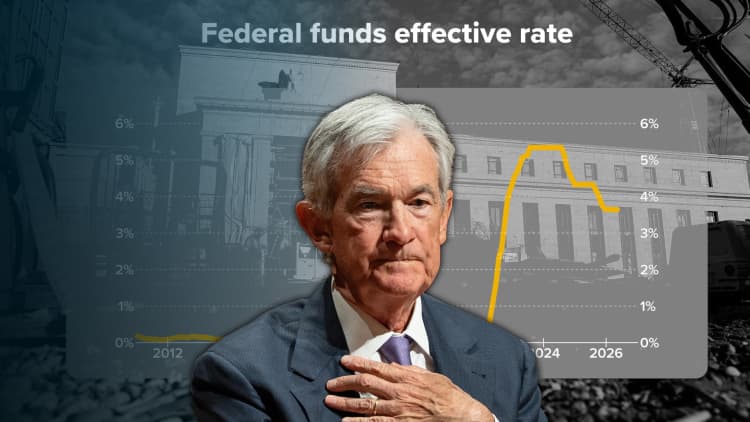 watch nowVIDEO4:3204:32How Jerome Powell reshaped the FedThe Fed
However, such a paradigm shift is likely to encounter significant resistance from within the Federal Reserve itself. Some policymakers have expressed skepticism regarding both the feasibility of substantially reducing the Fed’s asset holdings and the potential benefits derived from such an action.
“I believe shrinking the balance sheet is a misguided objective, and many of the proposed methods to achieve this goal could inadvertently compromise bank resilience, disrupt money market operations, and ultimately threaten financial stability,” stated Fed Governor Michael Barr in a recent address. He further elaborated that certain approaches might even lead to an expansion of the Fed’s direct involvement in financial markets.
Barr’s perspective emphasizes that focusing solely on the aggregate size of the balance sheet is overly simplistic. He argues that critical attributes such as the duration and composition of assets held by the Fed are equally, if not more, important. Neglecting these nuances, he contends, could result in “perverse” outcomes, including heightened market volatility and an increased likelihood of further central bank interventions. Concurrently, he suggested that a reduction in banks’ reserve requirements could potentially destabilize the financial system.
Anatomy of Balance Sheet Operations
The mechanics by which the Federal Reserve manages its balance sheet, particularly concerning bank reserves, are fundamentally straightforward.
During periods of balance sheet expansion, the Fed credits its own accounts with newly created digital currency, which it then utilizes to acquire assets from commercial banks. This process effectively injects liquidity into the banking system in the form of reserves. Conversely, when the Fed seeks to reduce its balance sheet, it ceases its asset purchases and allows the proceeds from maturing securities to roll off its holdings without reinvestment.
 watch nowVIDEO3:4003:40Kevin Warsh’s legacy will be reforming the Fed, says Mohamed El-ErianSquawk on the Street
Complementing these balance sheet actions, the Federal Reserve employs its trading desk to manage interest rates towards its targeted levels. The central bank also possesses a suite of supplementary tools, including the interest rate paid on reserves held by commercial banks, the discount window lending rate, and, crucially, overnight reverse repurchase agreements (ON RRPs) designed to facilitate the smooth flow of financial liquidity.
The Federal Reserve has operated under a framework characterized by “ample” reserves, a somewhat ambiguous designation signifying a level of reserves that is more than typical but not excessively high, which would be termed “abundant.” Warsh has signaled a potential return to the pre-crisis policy paradigm of “scarce” reserves, with the provision to inject liquidity as necessitated by market conditions.
“Reasonable individuals may hold differing views on this matter,” observed Bill English, formerly the Fed’s head of monetary affairs and now a professor at Yale University. “The Federal Reserve could certainly revert to a system with scarce reserves, and such a system would function effectively. The transition might present some complexities, and it would be prudent to implement it gradually. However, I believe it is achievable.”
Following an extended period, spanning the better part of the last 18 years, where the Fed’s balance sheet has been instrumental in maintaining operational stability – and, arguably, in supporting the extended equity market bull run – market participants will be closely observing any potential shifts.
“I would fully anticipate the Federal Reserve engaging in an open dialogue concerning the establishment of a structured framework for future operations. This would serve to mitigate the market’s implicit assumption of unlimited intervention capacity,” stated Wrightson economist Crandall. Implementing such clarity “would enable the market to formulate more rational expectations regarding potential outcomes.”
Currently, the Federal Reserve has not formally articulated clear guidelines governing the circumstances and modalities under which its balance sheet will be utilized.
While market participants have adopted specific terminology for balance sheet operations – quantitative easing (QE) for expansion and quantitative tightening (QT) for reduction – the Fed has not provided explicit guidance on the triggers for engaging in either strategy. This lack of clarity is particularly pronounced when attempting to differentiate between actions aimed at addressing market functioning and those intended to support the Fed’s dual mandate of price stability and maximum employment.
“The Federal Reserve has historically fallen short in establishing a clear framework for the deployment of quantitative easing,” commented Loretta Mester, former president of the Federal Reserve Bank of Cleveland. “I believe the central bank has not effectively distinguished or articulated, over time, the specific monetary policy objectives driving its asset purchase programs.”
Navigating the Communication Landscape
This is an area where Warsh’s influence could be particularly pronounced.
The formulation and communication of policy guidance fall squarely within the purview of the Fed Chair’s responsibilities. Warsh may seek to temper market expectations that the central bank will readily resort to expanding asset purchases at the first sign of market turbulence.
Furthermore, Warsh has expressed support for initiatives undertaken by Michelle Bowman, the Fed’s Vice Chair for Bank Supervision, aimed at easing certain regulatory constraints. Part of these efforts could involve modifying the types of assets banks can classify as reserves and utilize during periods of financial stress. Lorie Logan, President of the Federal Reserve Bank of Dallas, referenced these developments in a recent speech, indicating anticipation for “seeing how that work progresses.”
Logan possesses direct experience with the complexities of balance sheet management, having previously led the trading desk at the Federal Reserve Bank of New York, the entity responsible for executing the central bank’s open market operations.
In her April 2nd address, Logan also highlighted the availability of alternative tools at the Fed’s disposal to facilitate liquidity flows, suggesting an approach that integrates elements from both the perspectives advocated by Warsh and Barr.
Echoing the sentiments of other officials, she emphasized the importance of a gradual and deliberate approach to addressing these complex issues.
“I would underscore that any adjustments to the balance sheet should be undertaken gradually and with meticulous planning,” Logan stated.
Initiating the Analytical Framework
Internally, Federal Reserve officials are preparing for robust debate on these matters.
Researchers at the central bank have published a series of papers addressing the issue, including a document titled “A User’s Guide to Reducing the Federal Reserve’s Balance Sheet.”
This research, presented without advocating for a specific policy direction, suggests that up to $2.1 trillion in balance sheet reductions could be achieved under the existing policy framework. Further reductions might be feasible if the Fed were to transition to a scarce reserves operating system. The paper also estimates that the process of implementing such changes could take “at least a year and quite possibly several” before initiation.
It is highly probable that all these proposals will be considered once Warsh assumes his position on Friday.
He inherits a Federal Reserve facing not only significant economic headwinds but also considerable political expectations from an administration that frequently criticized the outgoing Chair, Jerome Powell, referring to him as “Too Late” and expressing dissatisfaction with his reluctance to lower interest rates as desired by the President.
Despite the prevailing discourse surrounding “regime change,” former officials caution against anticipating a dramatic and immediate overhaul. Warsh’s ambitious objectives are likely to encounter the pragmatic realities of central bank operations and consensus-driven decision-making.
Warsh will lead a Federal Open Market Committee (FOMC) that operates on consensus principles, where even substantial policy shifts are typically executed deliberately and only after extensive internal deliberations. These officials maintain that political considerations remain outside the confines of the central bank’s chambers.
“I attended FOMC meetings during Alan Greenspan’s tenure, which represents a considerable period. Politics has never been a factor within that room,” asserted Mester, the former Cleveland Fed president. “Political considerations are entirely absent from the discussions.”
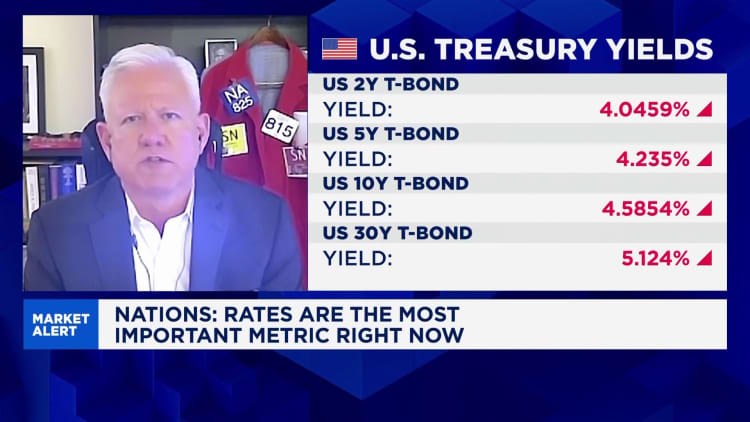 watch nowVIDEO4:0004:00Fed Chair Kevin Warsh will have a hard time navigating the political minefieldSquawk Box Asia
Business Style Takeaway: The potential recalibration of the Federal Reserve’s balance sheet strategy under new leadership presents a significant inflection point for global markets. Investors and strategists must prepare for nuanced shifts in liquidity provision and crisis intervention protocols, which could influence interest rate expectations and overall financial stability.
Details can be found on the website : www.cnbc.com