

A posthumous honour is set to be bestowed upon William Constable, a pioneering Victorian photographer credited with capturing what is believed to be the first royal photographic portrait. Constable, who established the premier photographic portrait studio in Brighton in 1841, will be commemorated with a blue plaque at 57 Marine Parade, the former site of his establishment.
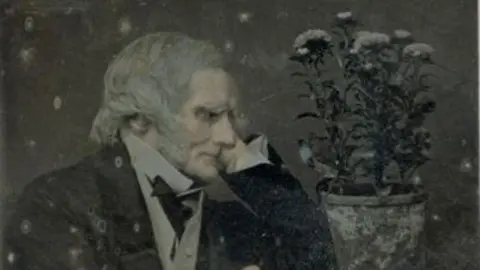 University of Brighton
The initiative for this recognition comes from Claire Constable, a descendant and author who has extensively researched her family’s legacy.
Professor Annebella Pollen of the University of Brighton, who has collaborated on research with the National Museum of American History, highlighted Constable’s significant, yet often overlooked, contribution to early photographic art in Brighton. “Much of his story has remained untold, and many of his photographs have not been seen for nearly two centuries,” she remarked.
Constable’s “The Photographic Institution” was established on Brighton’s seafront just two years after the invention of photography itself. Patrons could visit his studio to have their likeness captured permanently using the daguerreotype process, an early form of photography on silver-plated copper sheets.
It is through this pioneering work that Constable is believed to have created the now-historic portrait of Prince Albert.
Today, the “William Constable: Brighton Daguerreotypes Project,” co-led by Professor Pollen and Shannon Perich, curator of photographic history at the Smithsonian Institute, is meticulously piecing together the narrative of Constable’s life, his studio, and his surviving works. This collaborative effort has shed new light on 130 photographs created by Constable between 1841 and 1861.
Business Style Takeaway: The rediscovery of William Constable’s work underscores the enduring impact of innovation and early adopters in shaping cultural and technological landscapes. For contemporary businesses and brands, understanding these historical precedents offers valuable insights into pioneering a new market and the importance of preserving and celebrating foundational contributions, which can resonate powerfully with audiences seeking authenticity and heritage.
Original article : www.bbc.com