

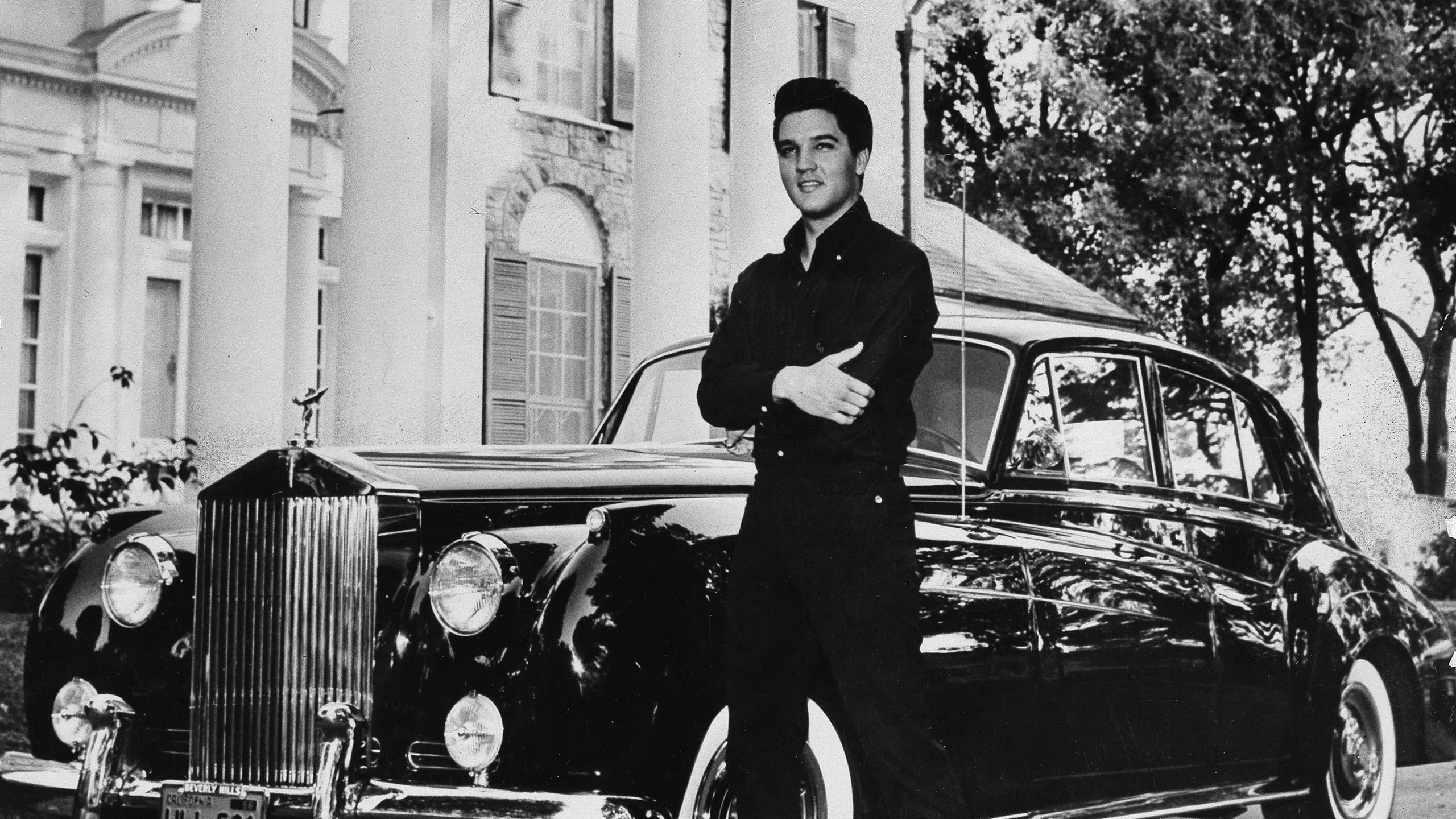
Elvis Presley, an icon whose influence resonates through American popular culture, maintained a profound connection with his Memphis residence, Graceland. This iconic estate, where he resided for two decades and tragically passed away, has become a pilgrimage site for millions, drawing an average of 600,000 visitors annually since its opening as a museum in 1982. Graceland stands as a powerful testament to a life that transitioned from humble beginnings to unparalleled global fame.
Foundations of a Legend
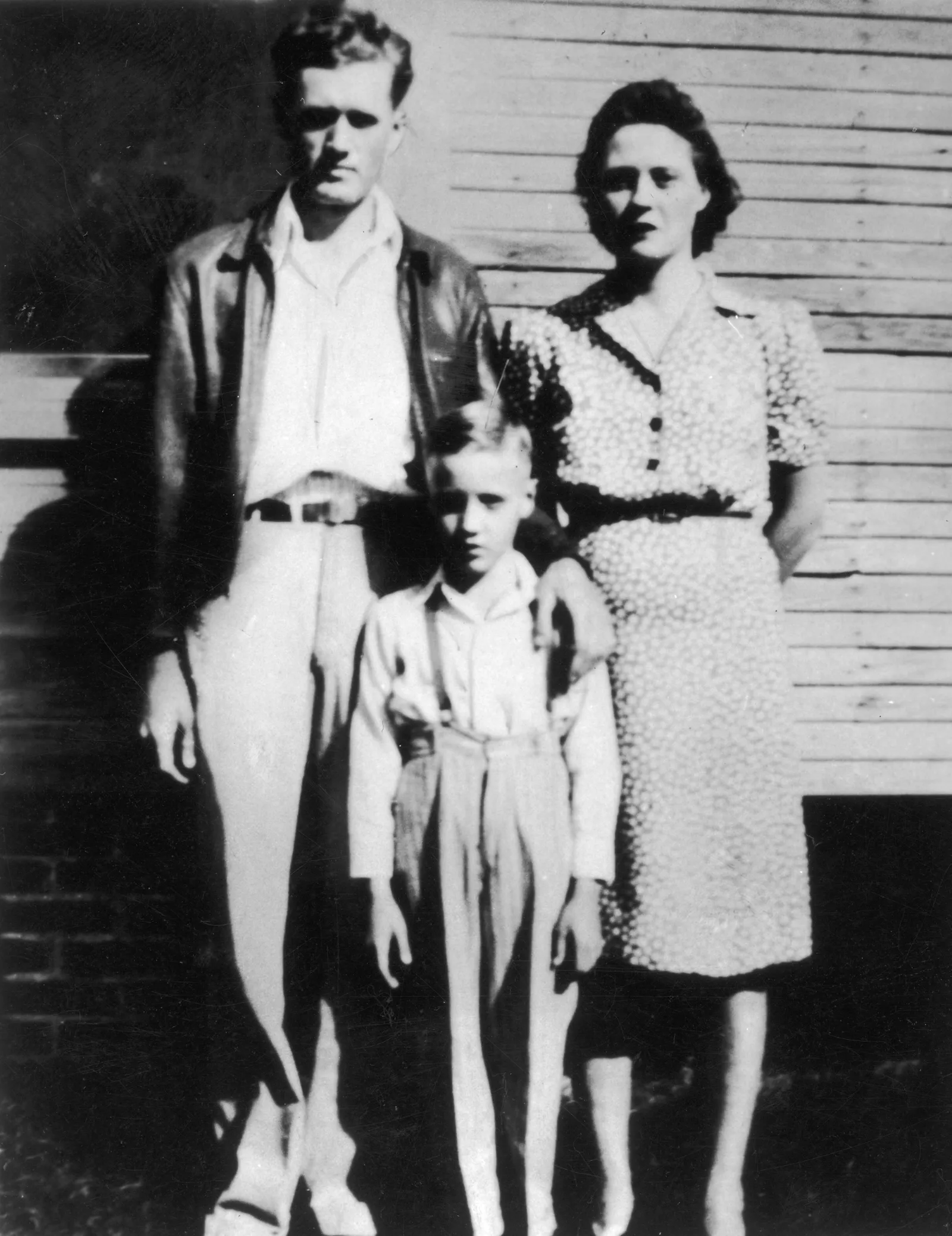
Early glimpses of Elvis Presley’s life reveal his humble origins, including a photograph taken in Tupelo, Mississippi, circa 1945. Born into modest circumstances, his early years were marked by a transient existence before his family’s relocation to Memphis, where they resided in public housing. This backdrop underscores the extraordinary trajectory of his life and career.
The Acquisition of Graceland
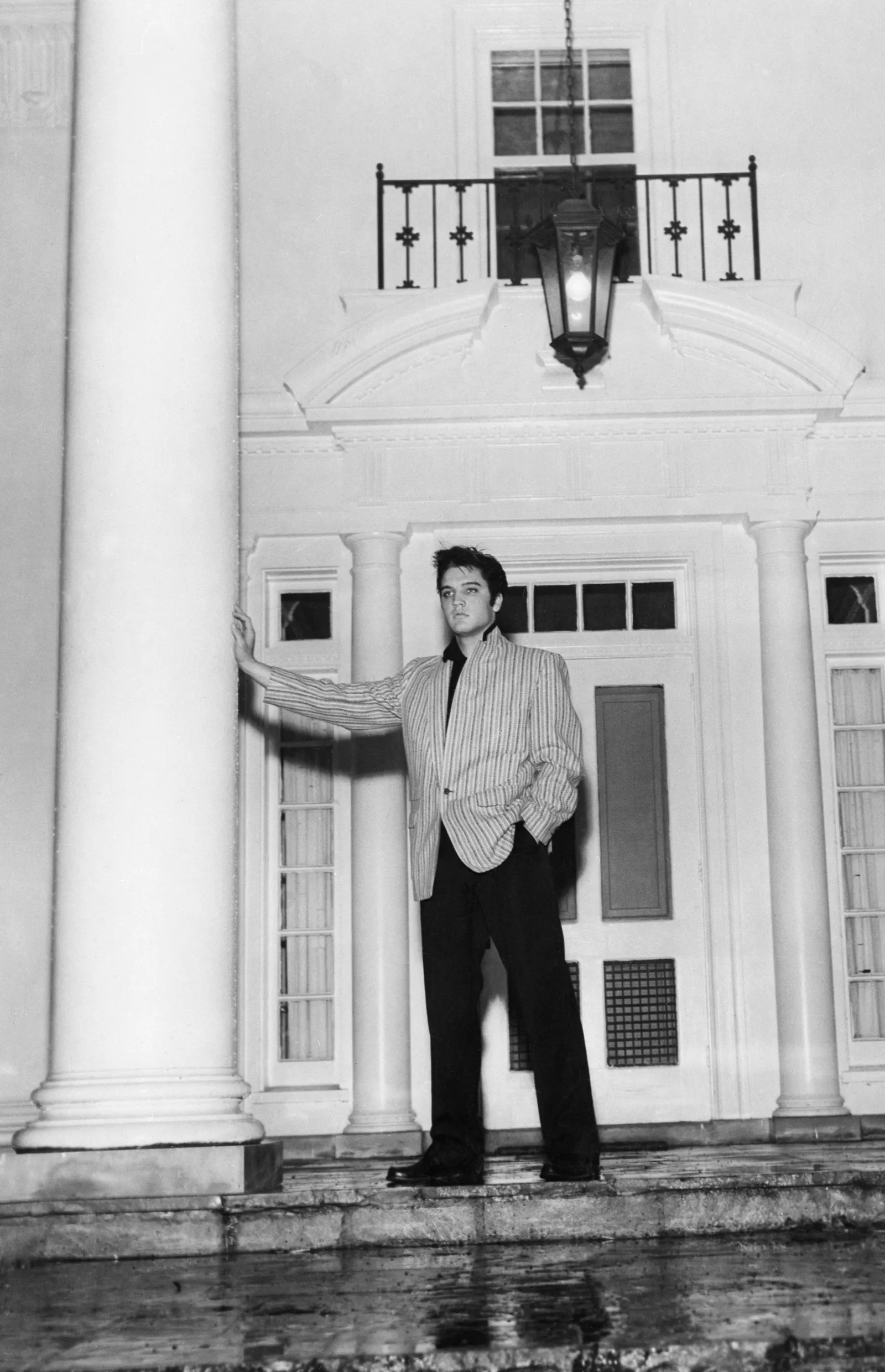
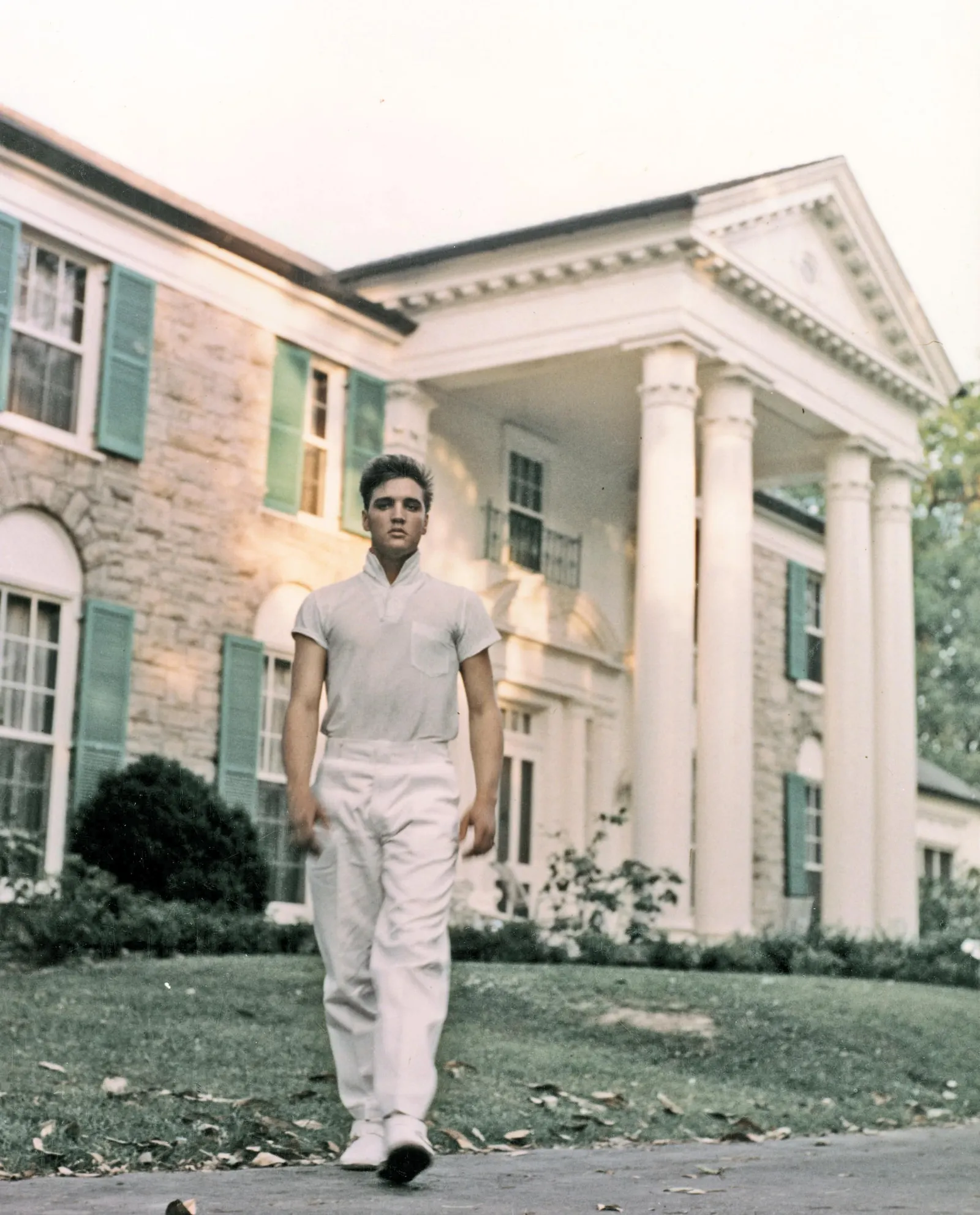
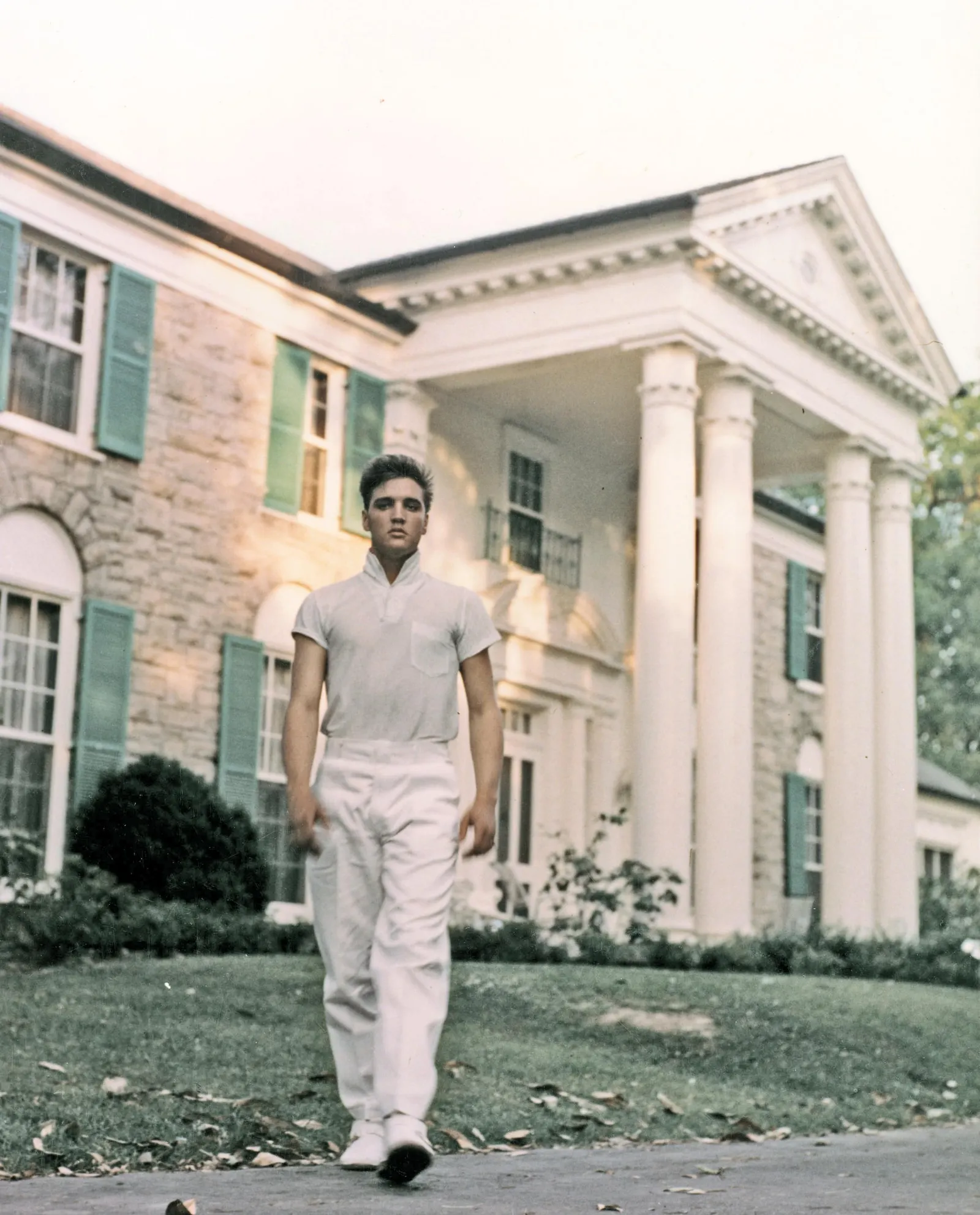
Emerging as a music phenomenon in the mid-1950s, Elvis Presley leveraged his burgeoning success and recording contract with RCA Records to fulfill his dream of homeownership. In March 1957, the 22-year-old purchased Graceland for $102,500, establishing it as his sanctuary for the remainder of his life. The estate, named by its original owner after his daughter, Grace, provided a magnificent backdrop for his personal and professional life.
Architectural Signatures and Expansions
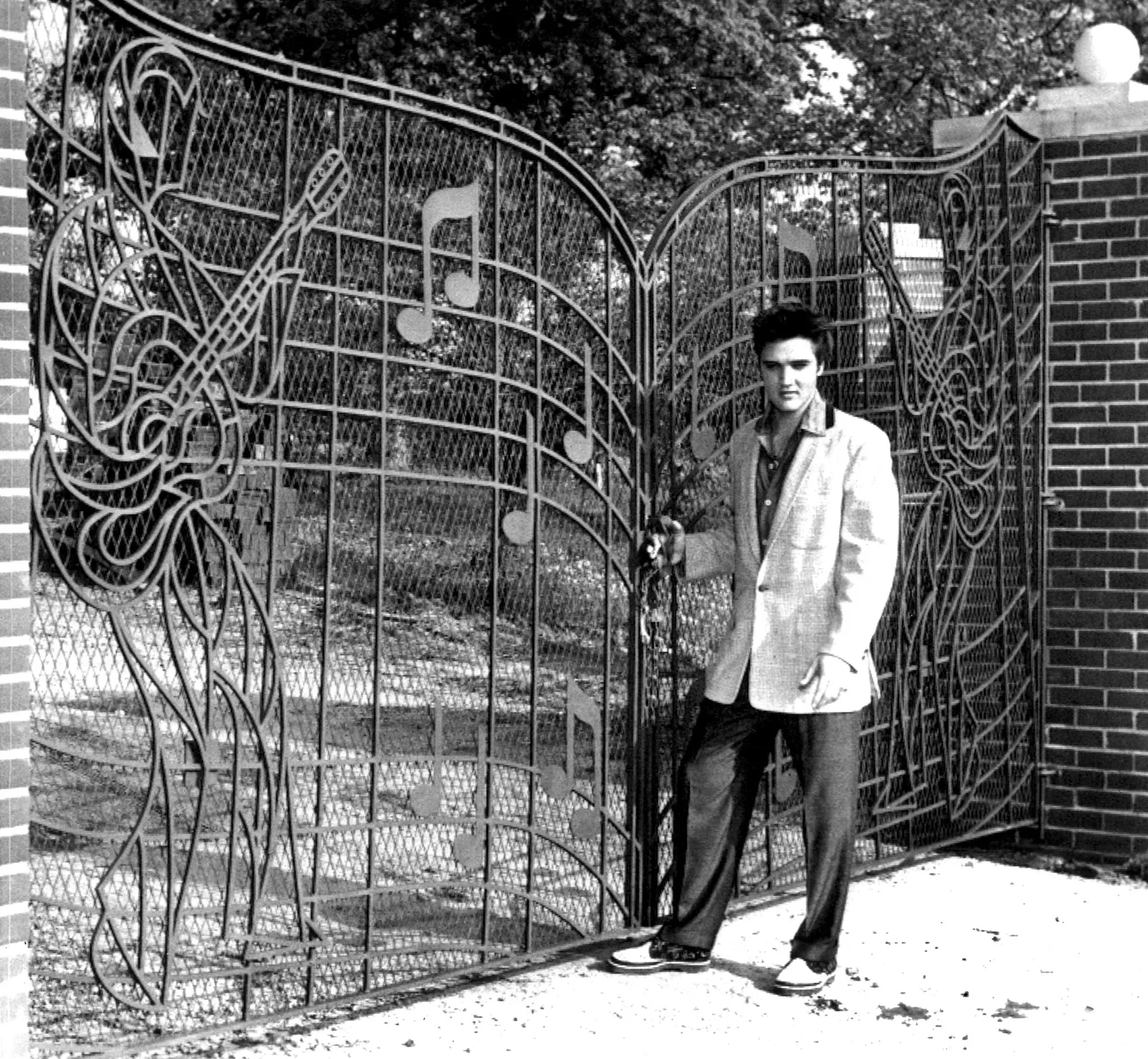
The iconic wrought iron gates, featuring musical motifs and life-size depictions of Presley, were a distinctive addition installed around April 1957, designed by Abe Saucer and custom-built by John Dillars Jr. Initially spanning 13.8 acres with a mansion of over 10,200 square feet, Graceland underwent significant expansion under Presley’s ownership, eventually encompassing 17,500 square feet and 23 rooms, including the celebrated Jungle Room.
Personalized Interior Design
Presley’s initial renovations at Graceland, costing approximately $500,000 (equivalent to over $5 million today), introduced several distinctive features. These included a striking 15-foot blue metallic sofa, later updated to white, a pink flagstone wall encompassing the property, a kidney-shaped swimming pool, and a fully equipped soda fountain, reflecting his unique aesthetic and penchant for grand gestures.
European Sojourn and Personal Milestones
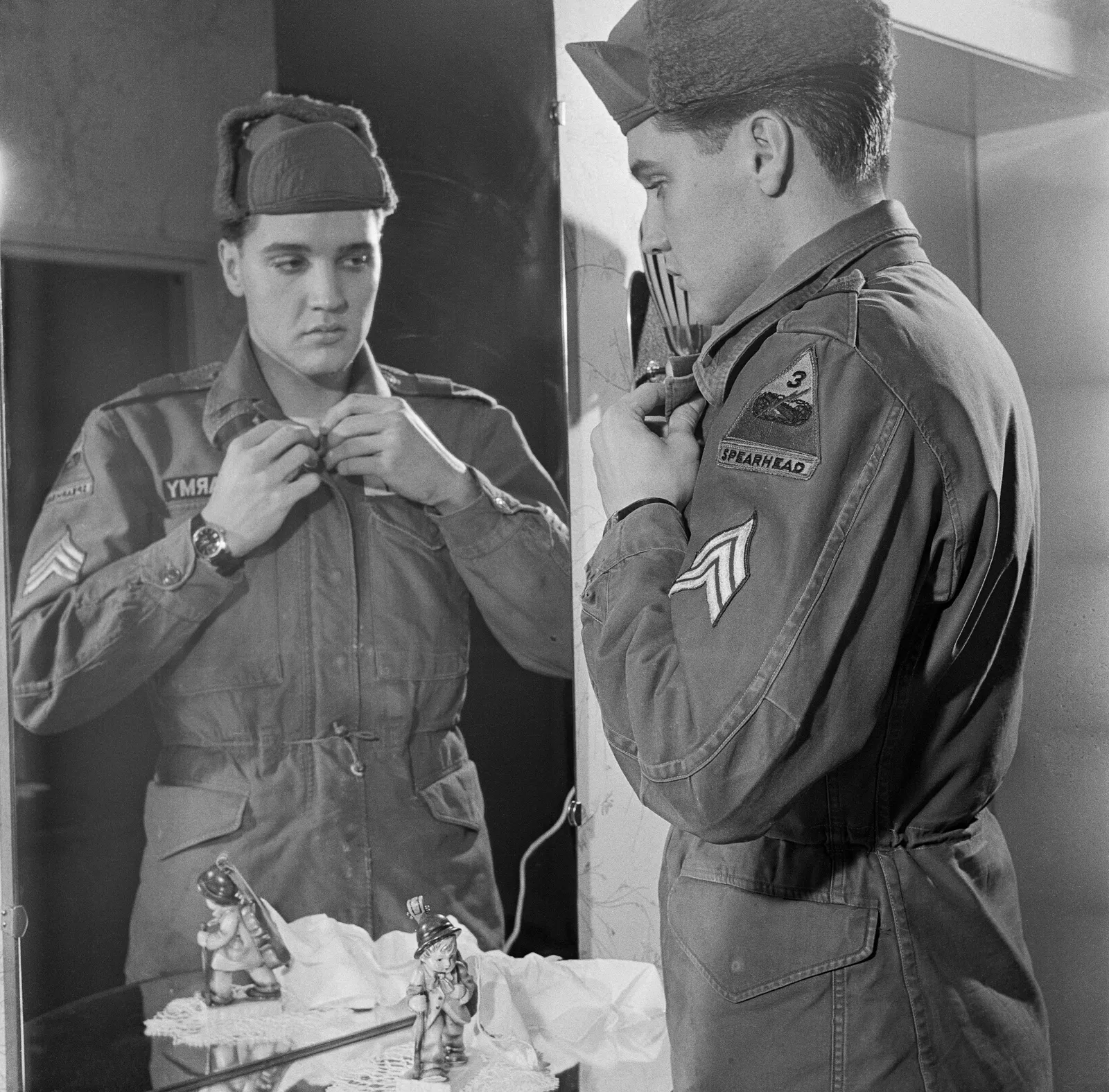
During his U.S. Army service in Germany, Elvis Presley resided off-post in Bad Nauheim. It was during this period, in January 1960, that he met Priscilla Beaulieu. This chapter of his life, though separate from Graceland, marked significant personal connections that would later intertwine with his home life.
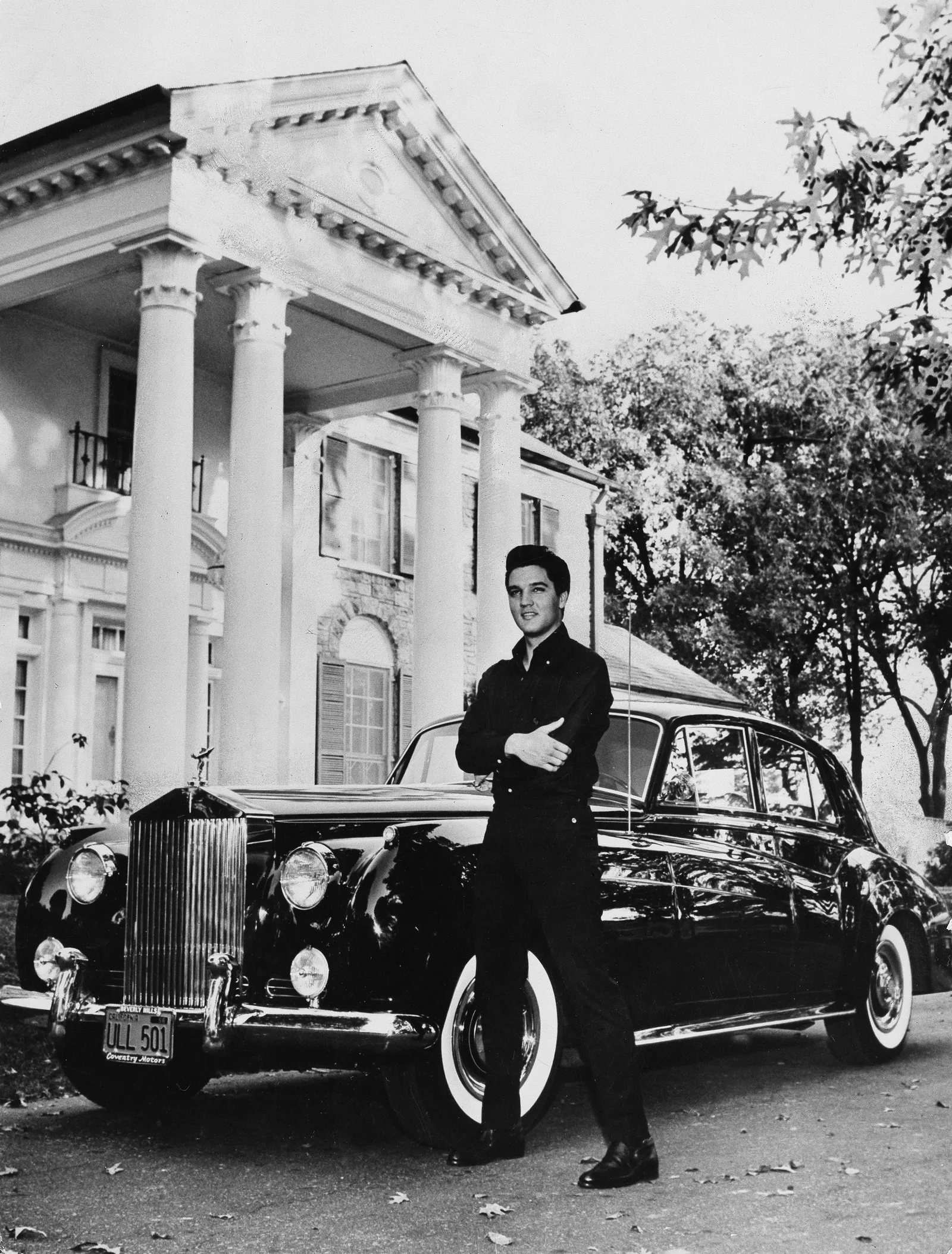
Upon his return to Graceland in March 1960, Presley found his beloved mother had passed away. He continued his long-distance relationship with Priscilla, who joined him at Graceland in 1962 and moved in the following year. His affection for fine automobiles is evident in his iconic Rolls-Royce, a symbol of his success, yet his playful side also manifested in custom golf cart adventures around the estate, transforming Graceland into a personal playground.
Family Life and Tropical Influences
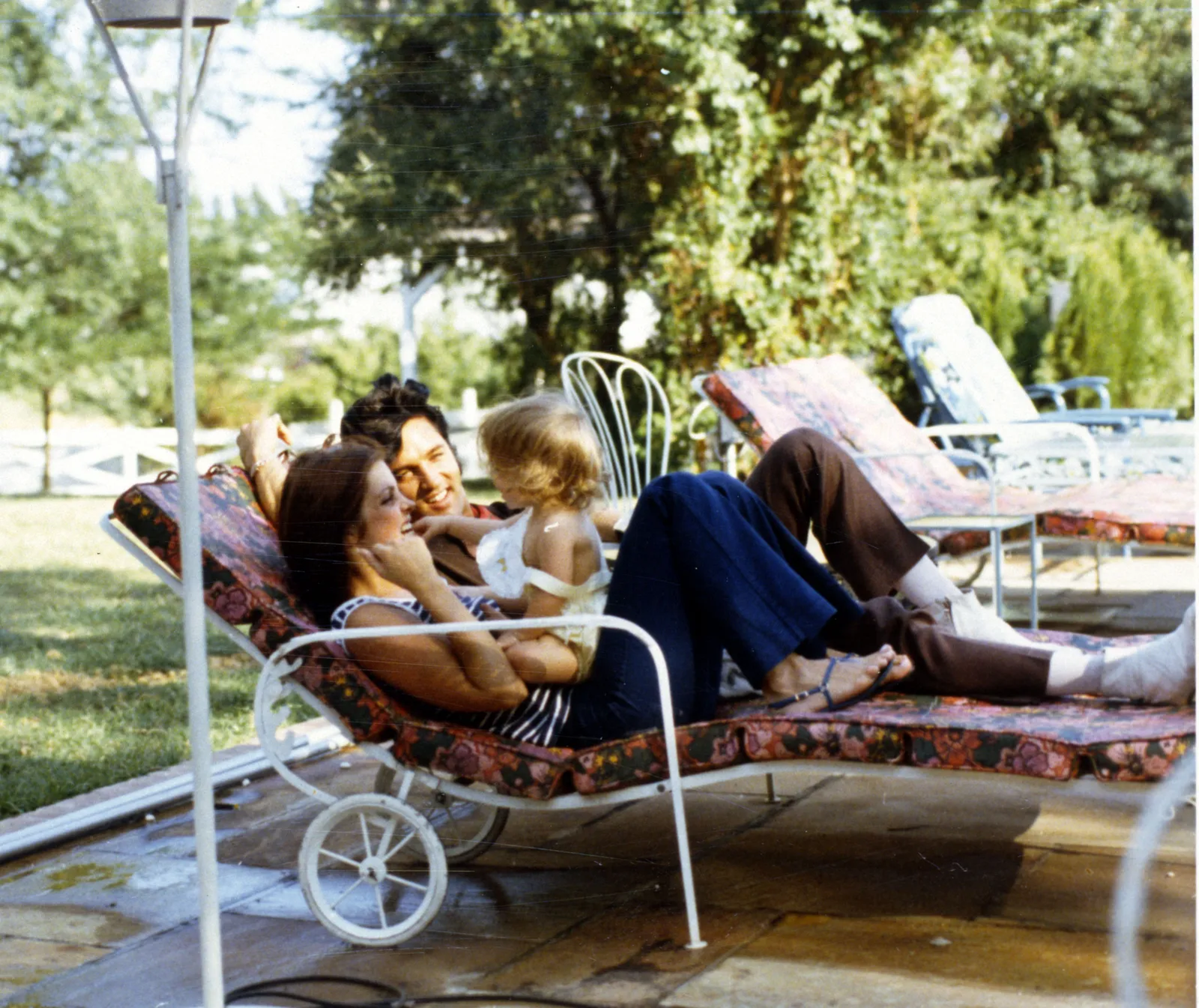
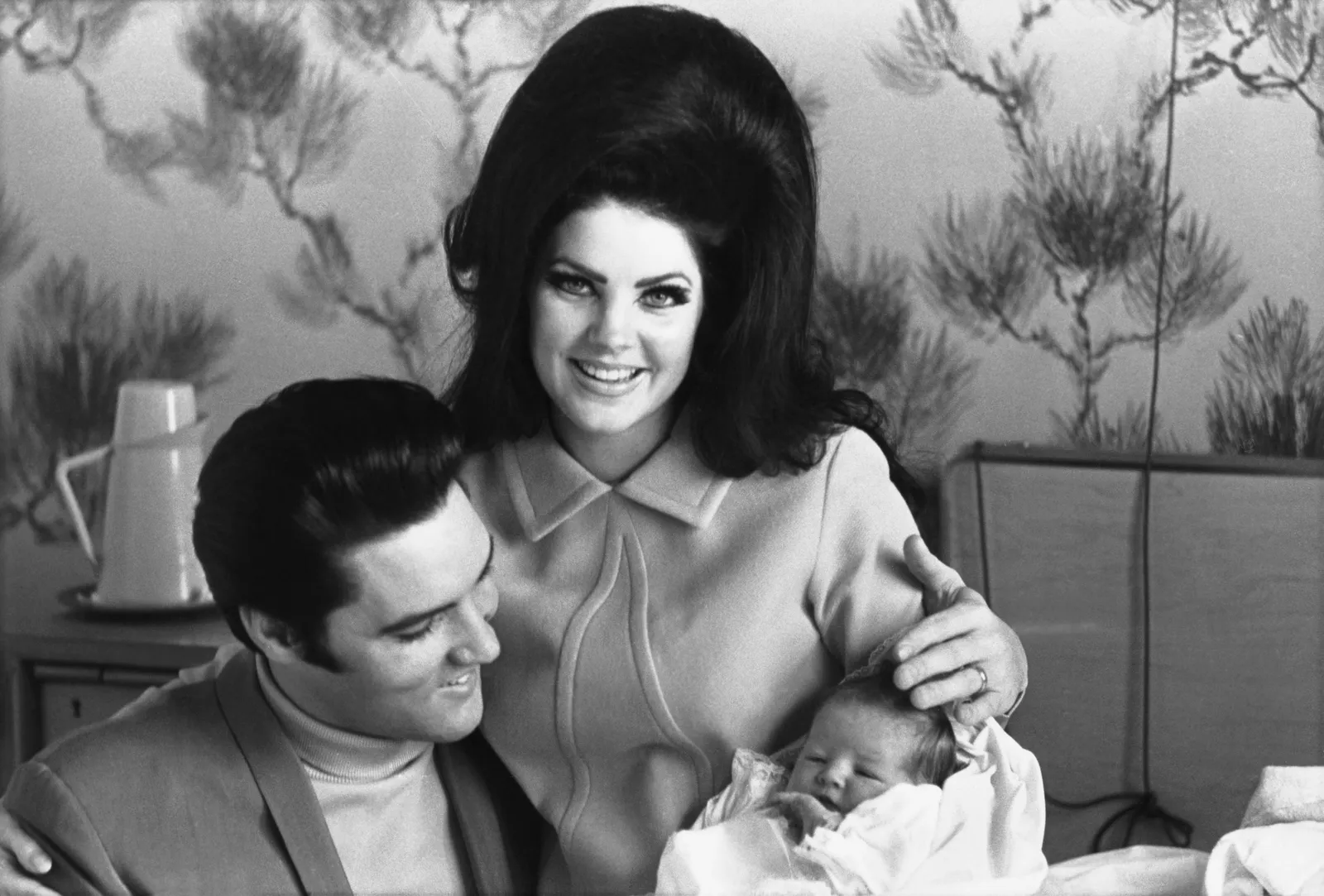
Elvis and Priscilla wed in Las Vegas in 1967, and their daughter, Lisa Marie Presley, was born nine months later. This photograph captures the new family at Graceland in 1968. Presley’s affinity for Hawaii, sparked by his role in the 1961 film *Blue Hawaii*, led him to incorporate a tiki-inspired aesthetic into Graceland’s design. The resulting Jungle Room, with its unique wood paneling, shag carpeting, and a distinctive rock waterfall, became a signature element of the estate.
A California Residence and Enduring Legacy
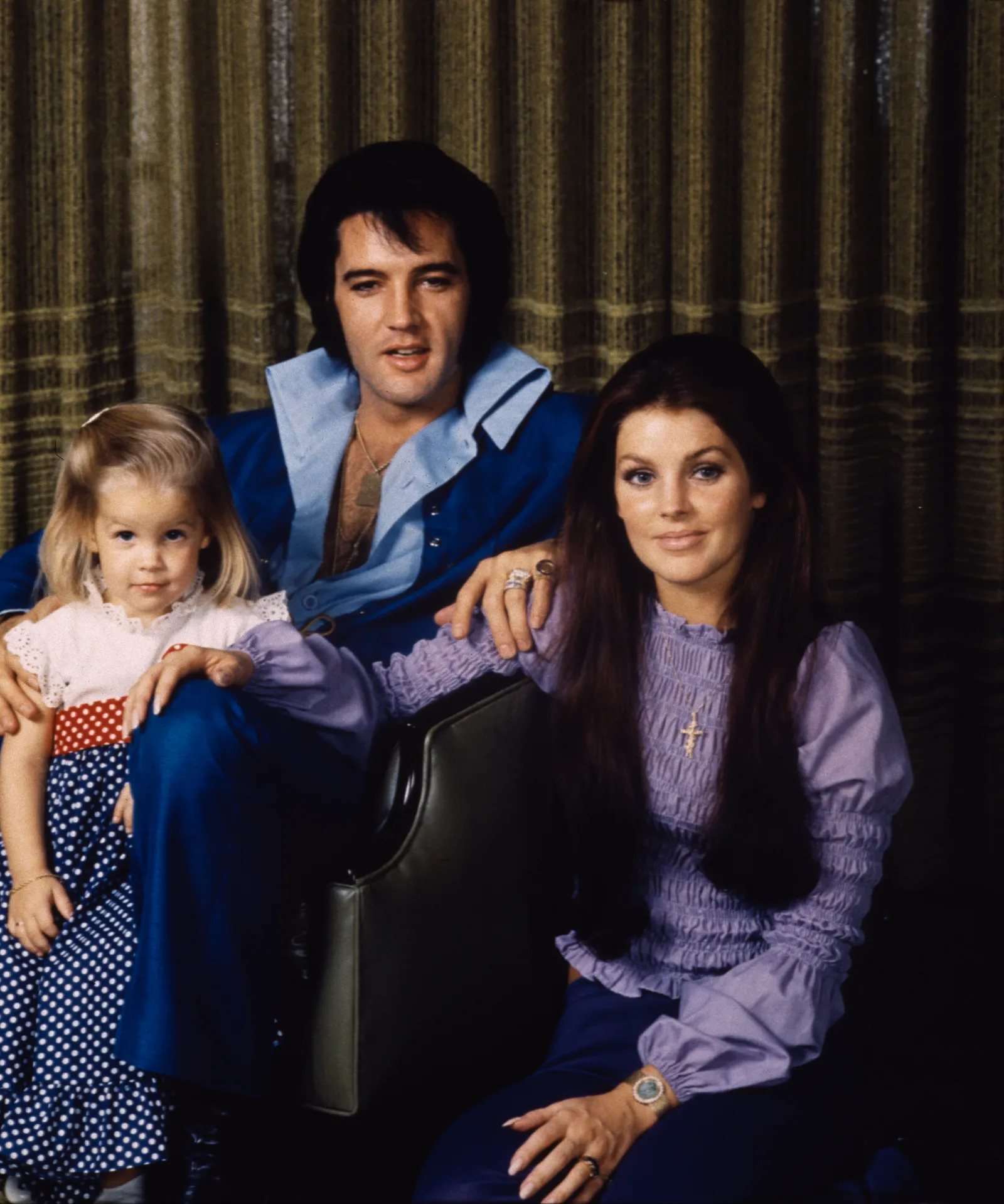
In 1970, the Presley family was photographed at their California residence in Beverly Hills, a French Regency-style home designed by Rex Lotery. Although Elvis and Priscilla divorced three years later, they maintained a close bond until his passing in 1977. Priscilla’s subsequent co-founding of Elvis Presley Enterprises, which transformed Graceland into a museum, solidified its enduring status as a cultural landmark and a symbol of American heritage.
Business Style Takeaway: Graceland exemplifies how a personalized architectural vision and interior design choices can transform a residence into a powerful personal brand statement. Elvis Presley’s estate showcases the creation of a unique haven that reflects his larger-than-life persona, contributing significantly to his enduring cultural legacy and desirability.
Source: : www.architecturaldigest.com