

Nvidia’s Strategic Pivot: Unveiling a New $200 Billion Market for Agentic AI CPUs
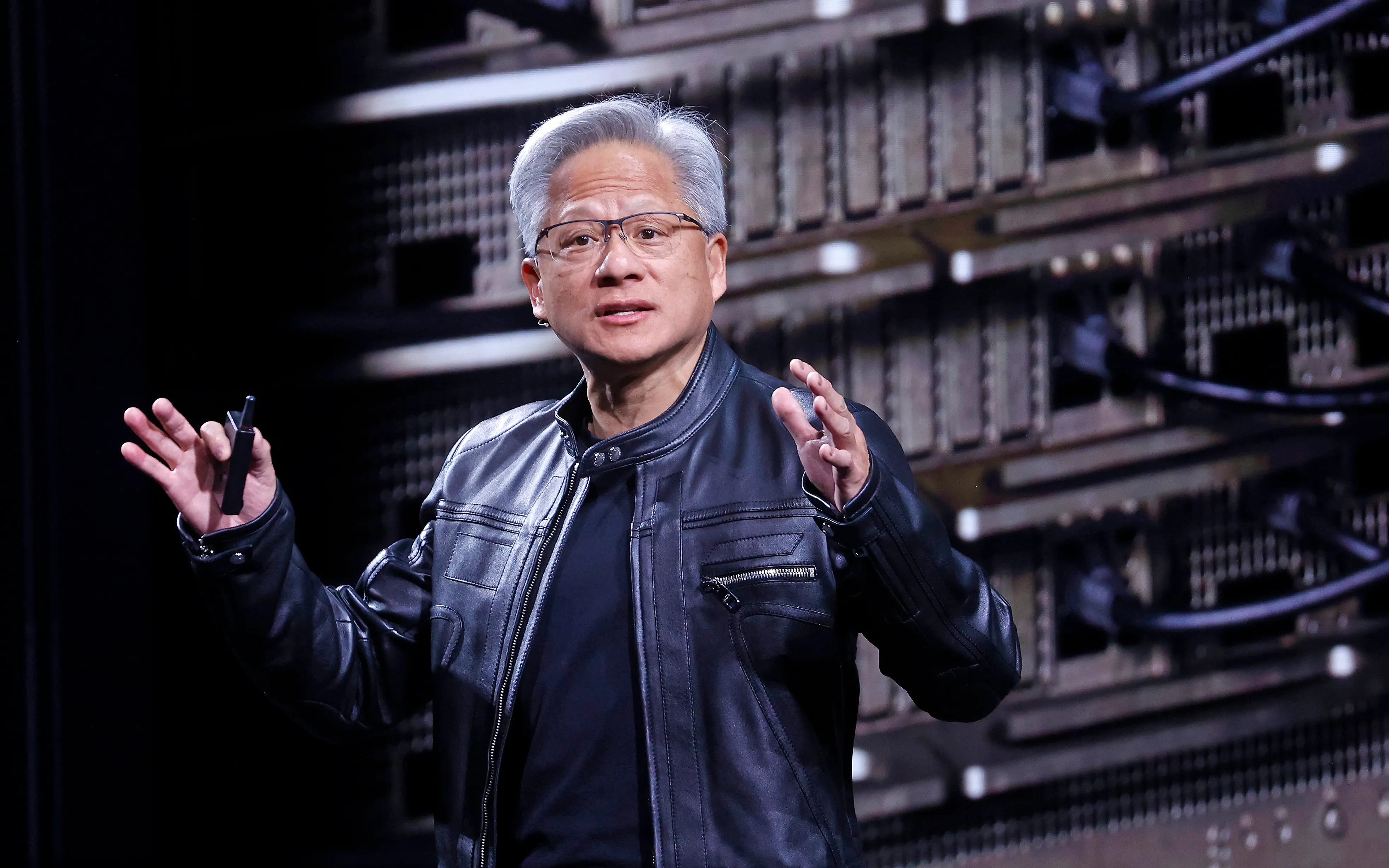
Jensen Huang, the visionary founder and CEO of Nvidia, has once again captured the industry’s attention with a bold proclamation: the identification of a substantial new total addressable market (TAM) for his company, estimated at $200 billion. This ambitious expansion hinges on the introduction of Nvidia’s novel CPU product, Vera, unveiled earlier this year. The announcement follows Nvidia’s impressive financial results, reporting a record-breaking quarter with $81.6 billion in revenue and projecting $91 billion for the upcoming period. Huang is positioning Vera not merely as an incremental addition to Nvidia’s portfolio, but as a potentially transformative technology poised to redefine computing infrastructure for the burgeoning field of agentic artificial intelligence.
The Competitive Landscape and the Rise of CPUs
Nvidia’s dominance in the Graphics Processing Unit (GPU) market is well-established. However, the central processing unit (CPU) sector has historically been the domain of industry stalwarts like Intel and AMD. The recent surge in AI development has intensified competition, with major cloud providers and tech giants like Amazon Web Services (AWS) actively developing their own AI-specific silicon. AWS CEO Andy Jassy has publicly articulated ambitions for AWS to compete directly in both GPU and CPU AI chip markets. This evolving landscape underscores the strategic importance for Nvidia to diversify beyond its core GPU strength and address emerging computational demands.
Vera: A Purpose-Built Solution for Agentic AI
Huang asserts that Vera is distinct from traditional CPUs, which are optimized for running multiple applications concurrently (“cores”). Instead, Vera is engineered for the specific requirements of agentic AI, designed to process complex sequences of operations, referred to as “tokens,” with unprecedented speed. This focus on accelerated token processing is critical for the efficiency and performance of AI agents, which are increasingly expected to undertake complex tasks autonomously. Huang further elaborated that while GPUs handle the “thinking” aspects of AI models, the execution of tasks by AI agents will largely rely on advanced CPUs.
Market Validation and Future Outlook
The conviction behind Huang’s $200 billion TAM projection is bolstered by early adoption figures. Nvidia has reportedly secured $20 billion in standalone Vera CPU sales within the current fiscal year, a significant indicator of market receptiveness. Huang envisions a future with billions of AI agents, each akin to a digital assistant, utilizing tools and interfaces analogous to personal computers. This projected proliferation of agents necessitates a substantial increase in computational power, particularly in the CPU domain, positioning Nvidia’s specialized Vera chip to capture a significant share of this projected growth. The company’s strategy involves offering Vera both as a standalone product and integrated with its Rubin GPU, signaling a comprehensive approach to powering the next generation of AI-driven computing.
Business Style Takeaway: Nvidia’s strategic push into the agentic AI CPU market, spearheaded by the Vera processor, represents a significant diversification beyond its GPU dominance. This move signals a crucial industry-wide shift towards specialized hardware architectures capable of supporting complex AI agents, potentially reshaping the competitive dynamics between chip manufacturers and cloud providers.
According to the portal: techcrunch.com