

Noa Tishby, an Israeli-American actress and producer, has positioned herself as a vocal advocate aiming to counter rising antisemitic and anti-Zionist sentiments, particularly in the post-October 7th geopolitical climate. Her efforts have, however, placed her at odds with both progressive anti-Zionist factions and elements within Benjamin Netanyahu’s right-wing Israeli government. Tishby’s approach to engaging with a global audience on these complex issues is characterized by a carefully curated persona, blending personal narrative with pointed messaging, a strategy commonly referred to as ‘hasbara’.
Public Reception and Personal Philosophy
Tishby’s activism has not been without controversy, drawing sharp criticism and even harsh labels, such as “genocide queen,” according to her own account. Despite this, she maintains that her lifelong commitment has been towards peace, a sentiment that appears to resonate with many of her supporters, who often approach her with expressions of admiration. She views the pervasive hostility as stemming from deeply rooted, historically exploited antisemitic tropes, amplified by the rapid dissemination capabilities of modern social media.

“Antisemitic ideas of Jewish power and control, this notion of the global Jew who is suspect no matter what we do: There’s a long history of exploiting this. It’s just now disseminated at the speed of light through social media,” Tishby remarked, drawing parallels to the rise of figures like Candace Owens and the pervasive nature of online discourse.
Career Pivot and Advocacy Genesis
A former prominent television actress in Israel and a naturalized U.S. citizen since 2008, Tishby relocated to Los Angeles in the early 2000s. Her entertainment career included roles in popular series such as *Nip/Tuck* and *Big Love*, and she served as an executive producer for HBO’s *In Treatment*, adapting its Israeli original, *BeTipul*. A growing disillusionment with perceived ignorance and bias regarding Israel prompted a career shift towards advocacy, leading her to cease active pursuit of entertainment projects.
Tishby asserts that Israel faces a unique standard of scrutiny, arguing, “No other country is debated as to whether or not it should exist.” This differential treatment, she believes, is intrinsically linked to the nation’s Jewish identity, a perspective she aims to challenge through her work.
Educational Initiatives and Media Critiques
Tishby has authored two bestselling books, one of which is subtitled “A Simple Guide to the Most Misunderstood Country on Earth.” She frequently points to media framing as a key area of concern, citing a *New York Times* investigation into Israel’s engagement with Eurovision as an example of what she considers nefarious and conspiratorial framing. “Israel is using ‘soft power’? So does every country,” she countered, highlighting what she perceives as a biased narrative.
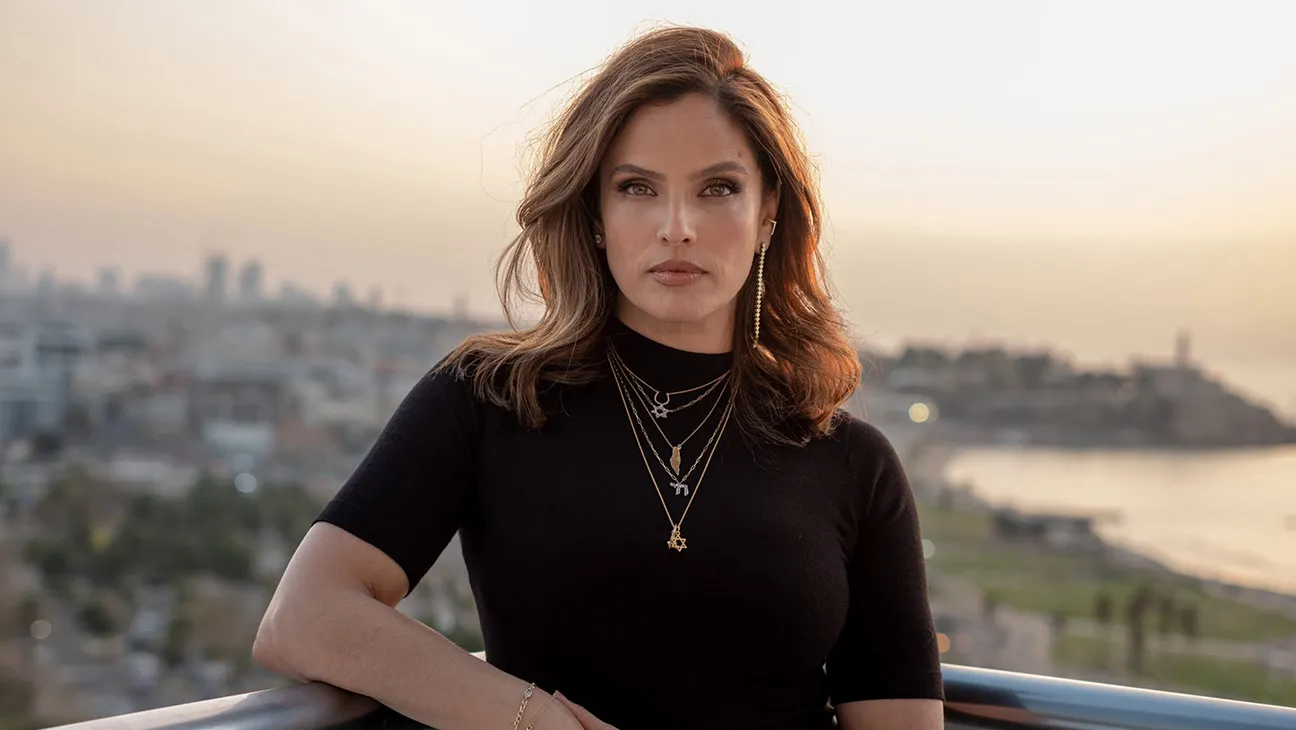
Her initiatives also focus on highlighting aspects of Jewish culture and history separate from Israeli politics, especially in light of escalating antisemitic incidents globally. A notable project is her annual Hanukkah online menorah lighting series, which has featured numerous high-profile celebrities. Tishby noted the significant number of “no’s” she received for this project, with many individuals citing fear for their safety as a reason for declining participation, underscoring the challenging climate for public engagement on such issues.
Educational Outreach and Political Disagreements
Tishby’s latest venture involves creating educational videos for children, covering topics from Judaism to the Holocaust. She has partnered with the Los Angeles Unified School District, the second-largest in the U.S., to develop classroom-approved materials and to support Jewish American Heritage Month. This initiative is seen as a direct response to what she describes as hostile attitudes towards Israel and Jewish people, particularly among younger demographics who she believes are being “groomed to be suspicious.”
Her advocacy has faced criticism, notably from Dr. Anat Plocker, a professor of Judaic Studies, who accused Tishby in *The Nation* of “weaponizing antisemitism discourses, equating anti-Zionism with antisemitism.” This tactic, Plocker argues, allows Israel to operate with impunity.

Tishby’s past association with Act for Israel, an advocacy group with government ties, drew scrutiny from the Quincy Institute for Responsible Statecraft. Hacked emails from 2011 suggested potential violations of the U.S. Foreign Agents Registration Act (FARA). Tishby later registered under FARA in 2022 when appointed as Special Envoy for Combating Antisemitism and the Delegitimization of Israel by Foreign Minister Yair Lapid. Her tenure ended a year later after she publicly criticized the rightward direction of Prime Minister Benjamin Netanyahu’s government, particularly its proposed judicial overhaul.
Organizational Independence and Personal Stance
In 2024, Tishby established her nonprofit advocacy organization, Eighteen, which operates with a small staff and budget, and she emphasizes its independence from the Israeli government. “I’m an American, doing American work,” she stated, reflecting her commitment to advocating from within the U.S. context. She believes Israel’s public relations efforts have been suboptimal, suggesting limited value in direct governmental involvement in U.S. advocacy.
Tishby maintains a nuanced position, critical of the West Bank settler movement while simultaneously rejecting the characterization of Israel’s actions in Gaza as genocide. Identifying as an “Oslo girl,” she supports both Israeli and Palestinian aspirations, asserting, “Being pro-Israeli doesn’t mean that you’re anti-Palestinian.” Her opposition is directed at groups like Hamas and Jihadism, stating, “If you want to kill me, I’m against you.”
Future Engagements and Industry Reflections
Tishby is planning a U.S. college tour, having previously addressed audiences at various campuses, including conservative institutions like Liberty University and facing protests at more liberal ones like Penn University. She expresses a desire to engage with progressive institutions such as Columbia and Berkeley but anticipates resistance to dissenting viewpoints.
Regarding the entertainment industry, Tishby observes that Jewish individuals in creative leadership roles often practice self-censorship, driven by either historical anxieties or the pragmatic need for career preservation in a challenging industry. She contends that despite accusations of media control, Jewish representation in on-screen storytelling has been historically limited, suggesting that embracing pride is a more viable path than succumbing to prejudice.
Tishby also shared the recent passing of her mother, Yael, on May 8th, describing her as an embodiment of active advocacy and principled conviction, a legacy she is proud to carry forward.
Business Style Takeaway: Noa Tishby’s journey highlights the evolving landscape of advocacy in the digital age, where individuals leverage personal brands and accessible platforms to influence public opinion on geopolitical issues. Her strategic positioning, navigating complex political divides while building educational initiatives, underscores a growing trend of non-governmental actors playing a significant role in shaping international discourse and challenging established media narratives.
Source: : www.hollywoodreporter.com