

Amidst escalating geopolitical tensions, the Eurovision Song Contest in Vienna has become a focal point for polarized demonstrations, highlighting the complex intersection of international politics, cultural diplomacy, and artistic expression. The event, designed to foster unity through music, finds itself navigating a landscape fraught with division, with protests and counter-protests reflecting the global outcry surrounding the conflict involving Israel.
Political Undercurrents at a Cultural Stage
Maria-Theresien-Platz, a symbolic heart of Vienna, has transformed into a stage for conflicting political ideologies. Rallies supporting and opposing Israel’s participation have taken place, underscoring the deep societal divisions that have permeated the lead-up to the song contest. One small gathering, intended as a “Eurovision Flashmob,” saw supporters of Israel assemble, their actions marked by a subdued yet palpable tension, amplified by the visible presence of security personnel and police vehicles.
The participation of Israel’s contestant, Noam Bettan, has drawn significant attention. While Bettan’s performance is considered a strong contender, the political climate has cast a long shadow, leading to stringent security measures involving multiple intelligence agencies. This heightened security reflects the volatile environment, a stark contrast to the celebratory nature of the competition itself. For residents like Osnot Slomovitz, the situation forces a difficult balance between national pride and the desire for peace in their adopted city, acknowledging the omnipresent security as a grim necessity.
The contest has seen a reduction in participation, with several nations boycotting and numerous sponsors withdrawing, directly impacting the event’s scale and reach. Meanwhile, Israeli journalists covering the event, such as Amit Cotler and Yaniv Dornbush, report an atmosphere that, while still charged, feels less hostile than in previous years. Cotler noted the intense security protocols, which are often unknown even to broadcast directors, emphasizing the unique challenges faced by the Israeli delegation.
A Counter-Narrative Through Protest
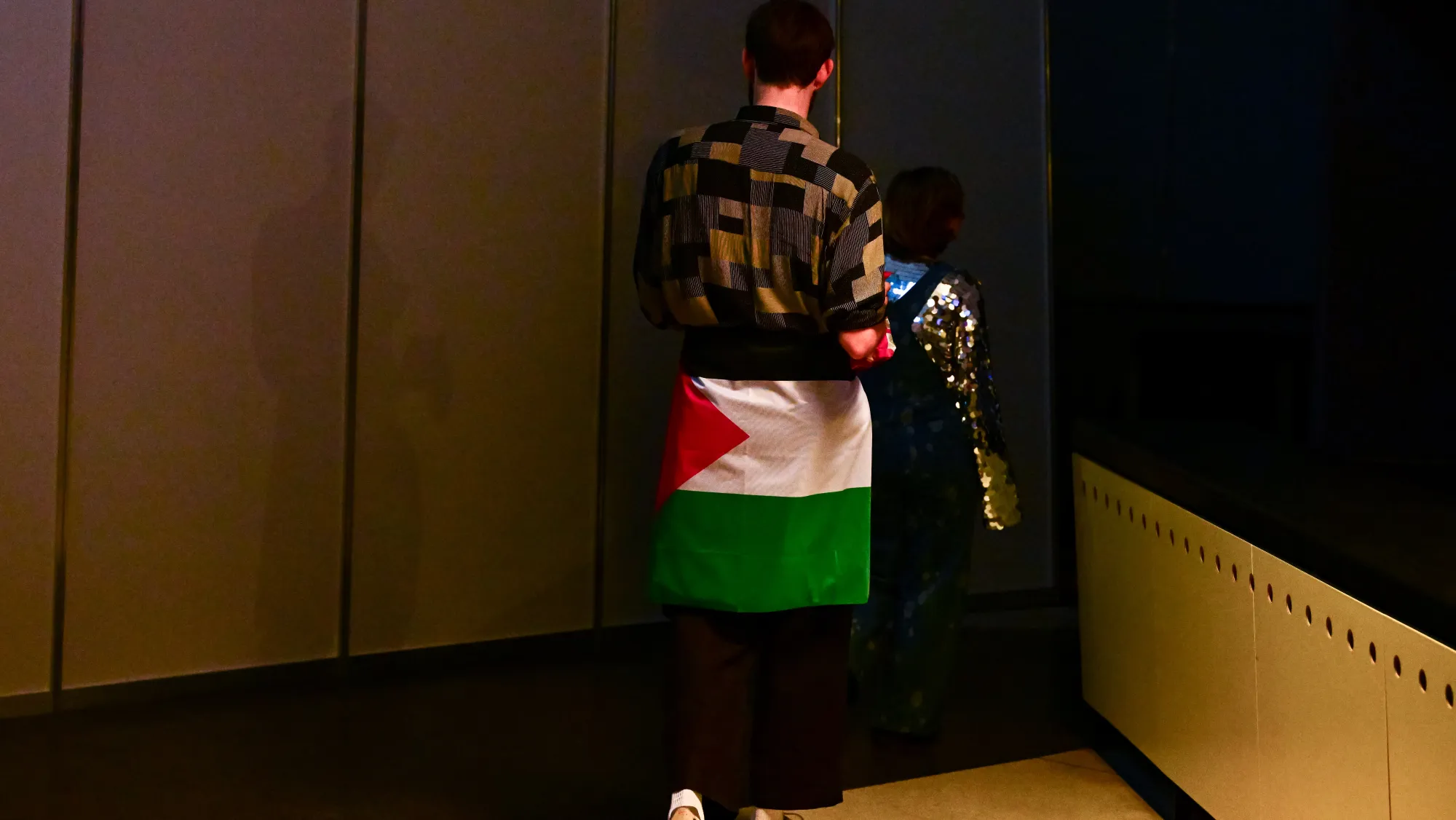
Parallel to the pro-Israel gathering, a significant demonstration organized by “Palestina Solidaritat” took place on Nakba Day, a day of mourning for Palestinians. This event, co-sponsored by figures like Roger Waters, drew a larger crowd, with participants expressing solidarity with Palestine through symbolic attire and banners. The protest directly challenged the European Broadcasting Union’s pledge of neutrality, with calls for a boycott of Israel, particularly within the arts community.

Speakers at the protest, including artist Topoké and singer Nina Maleika, framed Eurovision as a “propaganda show” that should be countered with artistic dissent. They condemned Israel’s participation, labeling it as a continuation of policies that allow impunity for alleged “settler” actions and “apartheid terror.” The protests also highlighted the challenges faced by pro-Palestinian sentiment, as evidenced by the defacement of a recently established Israeli fan cafe after several Viennese establishments refused to host it.
The Business of Eurovision and Its Ethical Dilemmas
Beyond the geopolitical drama, the technical prowess of the Eurovision Song Contest remains a spectacle in itself. The intricate stage designs, advanced lighting, and rapid set changes showcase a remarkable level of production value, offering a counterpoint to the political discord. This high-octane production, viewed by millions globally, underscores the immense business and cultural capital invested in the event.
The ethical tightrope walked by Eurovision and its participants is evident in the personal reflections of observers. An Austrian researcher, torn between attending both protests and the concert, articulated a common dilemma: the conflict between condemning political actions and participating in a cultural event that offers a space for imagined unity. The researcher recalled the public’s booing of a survivor of the October 7th attack, a moment that underscored the personal toll of politicizing the contest. The ideal of Eurovision as a “naive” space, where nations can unite through art, is increasingly challenged by the harsh realities of global conflict, leaving many to question the sustainability of such an idealistic platform in the current geopolitical climate.
Business Style Takeaway: The Eurovision Song Contest’s struggle to maintain its apolitical facade amidst intense geopolitical conflict demonstrates the growing challenge for global entertainment platforms to navigate divisive political landscapes. Brands and organizers must increasingly grapple with the business implications of cultural diplomacy, where balancing inclusivity with political realities can impact sponsorship, audience engagement, and the very identity of the event.
Information compiled from materials : www.hollywoodreporter.com