

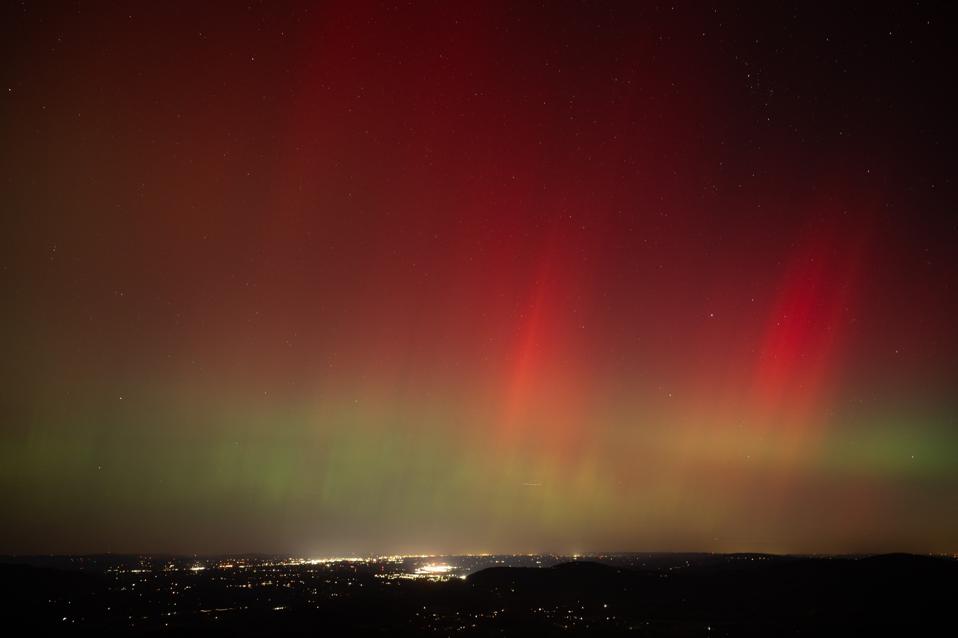
The aurora borealis may grace the skies over eight U.S. states on Friday night, with the National Oceanic and Atmospheric Administration (NOAA) forecasting a possibility of sightings along the northern U.S. border.
Key Information
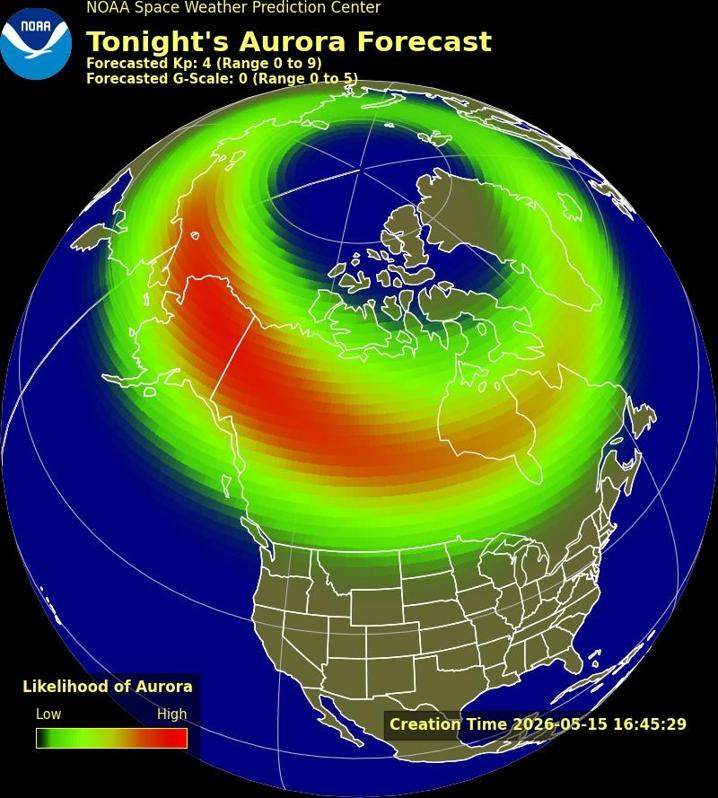
NOAA has issued a Kp index of four, suggesting that the aurora borealis will be notably bright and visually appealing for those in optimal viewing locations.
A similar viewing opportunity for the northern lights is anticipated for Saturday, with forecasts mirroring those for Friday.
Currently, NOAA does not predict any geomagnetic storms for Friday, which could otherwise enhance auroral displays.
Potential Viewing Locations
According to NOAA, specific regions within eight states have a “low” probability of observing the northern lights on Friday. These areas include northeastern Washington, the northernmost part of Idaho, northern Montana, most of North Dakota, northern Minnesota, and the far northern sections of Wisconsin and Michigan’s Upper Peninsula. Alaska, as is typical, is expected to have a high likelihood of aurora sightings.
Optimizing Aurora Viewing
To maximize the chances of seeing the northern lights, observers should seek locations with minimal light pollution and low moonlight. Friday night’s lunar phase is advantageous, with only 2% of the moon visible due to the waning crescent. The optimal viewing window is typically between 10 p.m. and 2 a.m., periods often associated with increased auroral activity.
Photographing The Aurora
For smartphone users, it is recommended to disable the flash and utilize the night mode feature. Employing a tripod and shooting with low apertures can also significantly improve the quality of aurora photographs.
Background Information
The current period, leading up to 2026, is likely to offer the last consistent auroral displays for some time. The sun reached the peak of its 11-year solar cycle in 2024, resulting in some of the most intense aurora sightings in five centuries. As the solar cycle progresses past its peak, the frequency and intensity of auroral activity are expected to decline.
Further Resources
Aurora Dashboard (NOAA)
Business Style Takeaway: The potential for increased aurora visibility highlights the dynamic nature of solar cycles and their impact on phenomena observable from Earth. Businesses, particularly those in tourism or outdoor recreation in affected regions, can leverage such events for targeted marketing and operational planning.
Learn more at : www.forbes.com