

Inflation accelerated in April, driven by a significant increase in energy prices that contributed to higher consumer costs, according to recent federal data. This report highlights the ongoing economic challenges faced by consumers amidst the geopolitical tensions related to the Iran war.
Key Economic Indicators
The Bureau of Labor Statistics reported that consumer prices increased by 3.8% in April compared to the previous year, and saw a 0.6% rise from March to April. These figures surpassed economists’ expectations, which had projected an annual increase of 3.7%.
This represents the steepest year-over-year growth rate recorded since May 2023, when it stood at 4%.
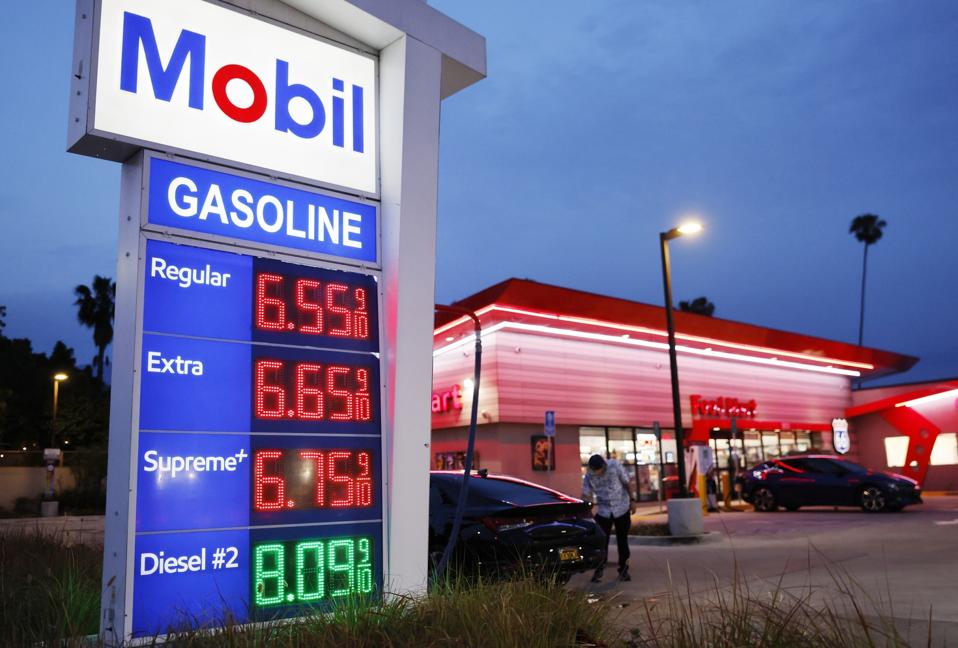
The energy index, encompassing costs for gasoline and utilities, climbed by 3.8% in April. This follows a substantial 10.9% surge in March and accounted for approximately 40% of the total price increases measured by the Bureau of Labor Statistics.
Airline fares experienced a significant spike, rising 20.7% over the past twelve months, marking the largest annual increase since February 2023. Fuel oil prices also saw a notable month-to-month increase of 5.8%.
Core inflation, which excludes the volatile prices of food and energy, registered at 2.8% in April. This figure was also above the consensus forecast of 2.7%, indicating that inflationary pressures extended beyond the energy sector.
Government Intervention Considerations
President Donald Trump indicated his intention to temporarily suspend the federal gas tax as a measure to provide economic relief to consumers at the pump. He stated that the suspension would be for an undefined period, with the tax to be reinstated once gas prices stabilize. However, the impact of such a measure on mitigating higher gas prices may be limited, given that the federal gas tax adds approximately 18.3 cents per gallon of gasoline and 24.3 cents per gallon of diesel. Based on Tuesday’s figures, this suspension could potentially lower the average price of a gallon of gas to $4.32 from $4.50, and diesel to around $5.40 from $5.64.
Future Policy Watch
The Federal Reserve’s upcoming release of minutes from its latest policy-making session on May 20 is anticipated to provide insights into the central bank’s approach to interest rates. In April, the Federal Open Market Committee voted 8-4 to maintain interest rates within the 3.5% to 3.75% range, reflecting the highest level of dissent since 1992. The Federal Reserve had noted that inflation remained “elevated,” with the Iran war exacerbating the surge in energy costs.
Economic Sentiment and Outlook
Consumer sentiment regarding the U.S. economy reached an unprecedented low in April and declined further to another record low in May, according to the University of Michigan’s consumer sentiment survey. Survey director Joanne Hsu observed that consumers continue to feel the strain of rising costs, particularly at the gas pump. Hsu suggested that recent developments in the Middle East, including peace talks and a ceasefire agreement, are unlikely to significantly improve consumer sentiment until oil supply disruptions are fully resolved and energy prices decrease. Consumers’ assessment of their current financial situation fell to its lowest point since 2009, even as their expectations for future inflation eased, with respondents anticipating a 4.5% price increase over the next year. Kathy Bostjancic, chief economist at Nationwide, cautioned that it could take several months for prices of oil, gas, diesel, and other energy commodities to return to pre-war levels.
Business Style Takeaway: Sustained inflation, driven by volatile energy prices and exacerbated by geopolitical events, poses a significant challenge to consumer spending and economic stability. Businesses must navigate these pressures by adapting pricing strategies, managing supply chain costs, and monitoring potential policy interventions like gas tax suspensions.
According to the portal: www.forbes.com